Have you ever stepped into a shower expecting a refreshing cascade, only to be met with a disappointing trickle? Or perhaps your dishwasher takes ages to fill, leaving you wondering if your home’s water system is performing optimally. These frustrations often stem from issues with water pressure and flow rate, two critical, yet often misunderstood, aspects of your home’s plumbing. Understanding what constitutes “good” water pressure and flow, especially as we move into 2026, is key to ensuring a comfortable, efficient, and well-maintained household. This guide will clarify these terms, outline ideal levels, and provide practical advice for keeping your water flowing perfectly.
Understanding Water Flow Rate and PSI
|
Our Picks for the Best High pressure faucet in 2026
As an Amazon Associate I earn from qualifying purchases.
|
||
| Num | Product | Action |
|---|---|---|
| 1 | TIORIY Kitchen Faucet Head with 15 Adapters, High Pressure 3 Functions Pull Down Kitchen Spray Head Replacement, Pull Out Kitchen Sink Sprayer Nozzle, Brushed Gold, ABS |

|
| 2 | GIMILI Kitchen Faucet with Pull Down Sprayer Single Handle High Pressure Kitchen Sink Faucet Commercial Double-Headed Stainless Steel Kitchen Faucets Brushed Nickel and Black |
|
| 3 | Kitchen Faucet with Pull Down Sprayer, High Arc Single Handle Brushed Nickel Stainless Steel 1 or 3 Hole Faucet for Kitchen Sink, Farmhouse, RV, Laundry, Bar, Outdoor |
|
| 4 | FORIOUS Kitchen Faucets with Pull Down Sprayer, Brushed Nickel, High Arc Single Handle Classic Stainless Steel Sink Faucet 1 or 3 Hole, Suitable for Farmhouse Camper Laundry Rv Bar |
|
| 5 | Chrome Brass Wall Mount Faucet, Single Cold Water Utility Tap, G 1/2 Inch Connection for Laundry Sink, Mop Basin, Garage, Outdoor Garden Hose |
|
| 6 | 2PCS 360 Degree Swivel Faucet Aerator Deluxe Water Saving Faucet Sprayer Water Saving Bubbler Pressurized Faucet Filter Kitchen Accessories (360 Degree, Count, 2) |
|
| 7 | 3-Adjustable Water Pressure Faucet with Booster Shower Heads - ABS Material, Extended Spout, Anti-Splash, Universal Connector |
|
| 8 | AIMADI Kitchen Faucet with Pull Down Sprayer,Commercial Stainless Steel Pull Down Sprayer Kitchen Faucet Single Hole Single Handle RV Laundry Outdoor Kitchen Sink Faucets |
|
| 9 | Inchant Outdoor Kitchen Sink Faucet - 360° Rotatable Single Hole Single Handle Cold Water Kitchen Faucet Flexible Neck Laundry Room Tap Bar Garden Outdoor Faucet, Deck Mount Chrome Finish |
|
| 10 | TMOK 1/2" x 3/4" Brass Outdoor Faucet & High Pressure Jet Nozzle with Leakproof Shut Off Valve, Heavy-Duty Brass 3/4" GHT Hose Nozzle with 4 Garden Hose Rubber Washers, Teflon Tape |
|
Before diving into optimal numbers, let’s define these essential plumbing terms.
What is Flow Rate?
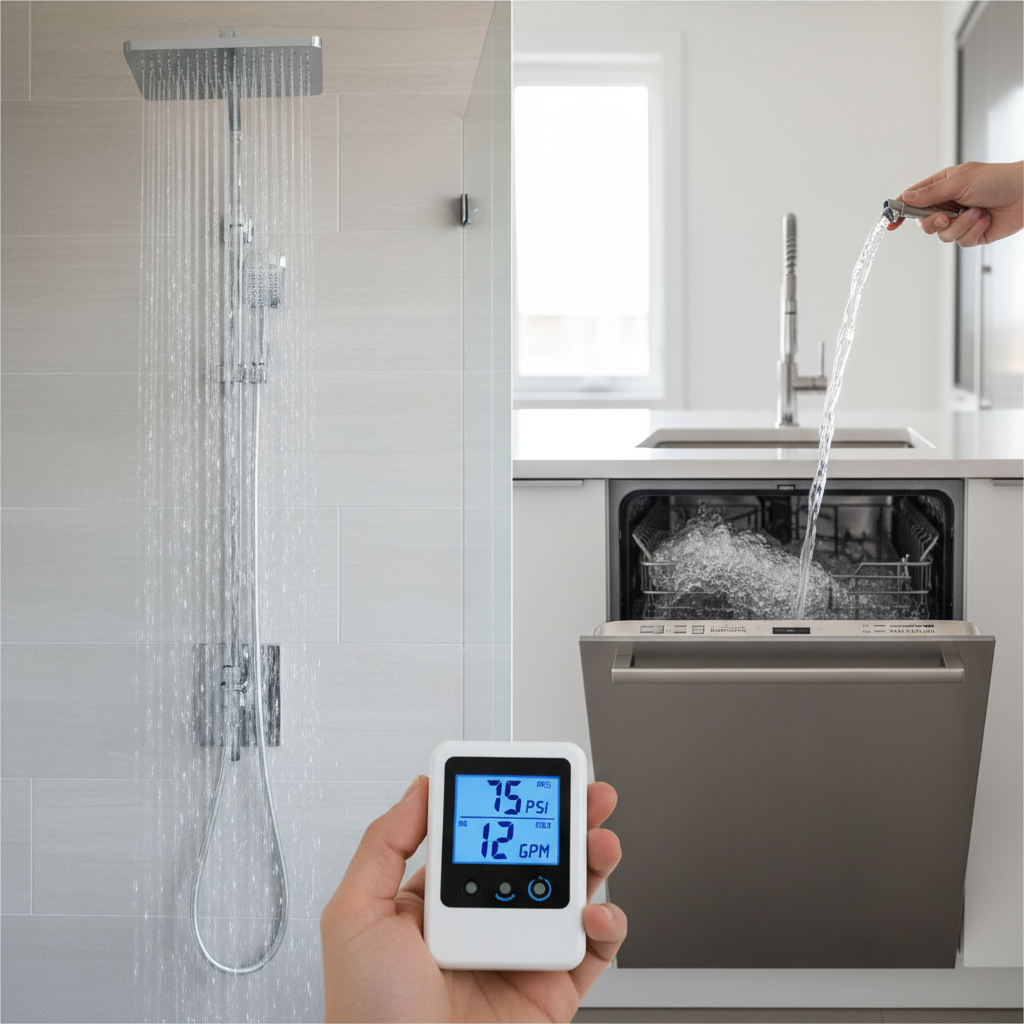
Flow rate refers to the volume of water that passes through a specific point in your plumbing system or fixture within a given amount of time. It is typically measured in gallons per minute (GPM) or liters per minute (LPM). Think of it as how much water is available to you. A good flow rate ensures that your shower is powerful, your bathtubs fill quickly, and your appliances operate efficiently. For example, common residential flow rates can range from 1.5 to 4.0 GPM, with toilets typically using 1.6-1.8 GPM and sinks around 2-3 GPM.
What is PSI?
PSI stands for “Pounds per Square Inch” and is the standard unit for measuring water pressure. This metric quantifies the force at which water is pushed through your pipes and out of your fixtures. While flow rate indicates volume, PSI indicates the strength of that volume. It’s the driving force behind the water delivery in your home, ensuring it reaches all faucets and appliances with adequate power.
The Relationship Between Flow Rate and PSI
While distinct, flow rate and PSI are closely related. High water pressure (PSI) generally contributes to a good flow rate, pushing a larger volume of water through your pipes. However, it’s possible to have high pressure but a low flow rate if your pipes are narrow or obstructed. Conversely, a good flow rate with insufficient pressure might feel weak or inadequate. A balanced approach, where both are optimized, provides the best water experience throughout your home.
What is a Good PSI for Your Home in 2026?
For most residential homes, the ideal water pressure range falls between 40 to 60 PSI. Within this range, your plumbing system, fixtures, and appliances are designed to operate efficiently without undue stress. Many experts pinpoint 50 PSI as the optimal target for balanced performance.
While 40-60 PSI is ideal, an acceptable range can extend from 30 PSI to 75-80 PSI. However, venturing outside the ideal zone can lead to various issues:
- Low Water Pressure (Below 40 PSI): If your PSI dips below 40, you’ll likely notice weak showers, slow-filling sinks and appliances, and overall unsatisfactory water delivery. This can make everyday tasks frustratingly sluggish and even prevent some appliances, like water softeners, from operating correctly.
- High Water Pressure (Above 75-80 PSI): While a powerful spray might seem appealing, excessively high water pressure can be detrimental to your plumbing system. Pressure consistently above 75-80 PSI can stress pipes, prematurely wear out fixtures, damage appliances (like dishwashers and water heaters), and lead to leaks or even burst pipes. Some plumbers advise against exceeding 90 PSI for typical residential systems, as it can void warranties and cause significant damage. Maintaining pressure within the safe zone is crucial for the longevity and health of your home’s entire plumbing infrastructure.
“Finding the sweet spot between 50 and 60 PSI is crucial. It’s about efficiency and protection – too low is inconvenient, too high is destructive.” – Admin, reviewreco.com
How to Measure Your Home’s Water Pressure
Testing your home’s water pressure is a straightforward process that can provide valuable insights into your plumbing system’s health.
- Acquire a Water Pressure Gauge: These inexpensive devices are readily available at most hardware stores and typically screw onto a hose bib.
- Locate an Outdoor Spigot or Utility Faucet: A hose bib outside your house or a laundry room faucet are ideal locations.
- Turn Off All Water: Before testing, ensure no water is running inside or outside your home. This includes toilets, washing machines, dishwashers, and all faucets.
- Attach the Gauge: Securely screw the water pressure gauge onto the chosen spigot.
- Open the Faucet: Slowly open the spigot all the way.
- Read the Gauge: The gauge will display your home’s static water pressure in PSI. It’s advisable to take readings a few times over a couple of days to get an accurate average. If your reading falls consistently outside the 40-60 PSI ideal range, further investigation may be needed.
Factors Affecting Water Pressure and Flow Rate
Several elements can influence your home’s water pressure and flow rate:
- Municipal Water Supply: The pressure provided by your city’s water utility can vary based on your location, elevation relative to the water source, and overall demand in your neighborhood.
- Pipe Diameter and Material: Older homes, especially those with original galvanized steel pipes, can experience reduced pressure and flow over time. These pipes are prone to internal corrosion and mineral buildup, which narrows the pathway for water. Upgrading to modern materials like copper or PEX can significantly improve water delivery.
- Clogs and Mineral Buildup: Sediment, rust, and mineral deposits (especially in hard water areas) can accumulate in showerheads, faucet aerators, and within pipes, restricting flow.
- Leaks: Even small, hidden leaks in your plumbing system can cause a noticeable drop in water pressure by diverting water away from your fixtures. An unexplained increase in your water bill can be a sign of a hidden leak.
- Faulty Pressure Reducing Valve (PRV): Many homes have a PRV installed where the main water line enters to regulate pressure from the municipal supply. If this valve malfunctions, it can either restrict water flow too much (low pressure) or fail to reduce it adequately (high pressure).
- Simultaneous Water Usage: Running multiple water-using appliances or fixtures at the same time (e.g., showering while the washing machine is filling) can temporarily reduce pressure and flow to individual outlets.
How to Improve Low Water Pressure (and Manage High Pressure)
Addressing water pressure issues can significantly enhance your home’s comfort and protect your plumbing.
For Low Water Pressure:
- Check Main Water Valve: Ensure your main shut-off valve is fully open. Sometimes it can be partially closed, inadvertently reducing your home’s pressure.
- Clean Aerators and Showerheads: Mineral deposits and sediment often restrict flow at the fixture level. Unscrew and clean aerators on faucets and soak showerheads in a vinegar solution to dissolve buildup.
- Adjust or Repair PRV: If your home has a pressure reducing valve, it might need adjustment. A clockwise turn typically increases pressure, while a counter-clockwise turn decreases it. If adjustment doesn’t work, the PRV may need replacement.
- Repair Leaks: Identifying and fixing any leaks, big or small, will restore lost pressure to your system.
- Flush Out Trapped Air/Sediment: Shutting off the main water supply, opening all taps to drain the system, and then slowly turning the main supply back on can clear trapped air and sediment.
- Install High-Pressure Fixtures: For specific areas like showers, consider installing showerheads designed to maximize spray force, even with lower incoming pressure.
- Consider a Booster Pump: If low municipal pressure is a persistent issue, a water pressure booster pump can be installed to increase pressure throughout your entire home.
- Plumbing System Upgrades: In older homes with severely corroded or narrow pipes, a complete re-piping with modern materials like copper or PEX might be the most effective long-term solution.
For High Water Pressure:
- Adjust Your PRV: If your home has a pressure reducing valve, adjusting it counter-clockwise can lower the pressure. Use a pressure gauge to monitor the PSI as you make small adjustments until it’s within the ideal range.
- Install a PRV: If your home doesn’t have a pressure reducing valve and your PSI is consistently above 80, installing one is highly recommended to protect your plumbing and appliances.
Maintaining Optimal Water Pressure and Flow
Proactive maintenance can save you from future headaches and costly repairs. Regularly test your water pressure, ideally once or twice a year, to catch any fluctuations early. Be mindful of unusual sounds like banging pipes, which can indicate high pressure, or persistent trickles, signaling low pressure. If you’re uncomfortable performing any adjustments or repairs yourself, consulting a licensed plumber is always the best course of action. They can accurately diagnose issues, recommend appropriate solutions, and ensure your plumbing system operates safely and efficiently.
Frequently Asked Questions
What is the difference between water pressure and flow rate?
Water pressure (PSI) is the force pushing water through your pipes, while flow rate (GPM) is the volume of water moving through them over time. You can think of PSI as the “push” and GPM as the “amount” of water.
Can high water pressure damage my appliances?
Yes, consistently high water pressure (above 75-80 PSI) can significantly reduce the lifespan of appliances like dishwashers, washing machines, and water heaters, often leading to leaks or premature failure.
How often should I check my water pressure?
It’s recommended to check your home’s water pressure at least once or twice a year, or whenever you notice a significant change in water performance.
Is 30 PSI too low for a house?
While 30 PSI is generally considered acceptable as a minimum, it is on the lower end of the spectrum. You might experience weak water flow from fixtures and some appliances may not function optimally. The ideal range is 40-60 PSI.
What causes sudden drops in water pressure?
Sudden drops can be caused by various factors, including a burst pipe, a main water line break, a malfunctioning pressure reducing valve, or even municipal work being done on the water supply in your area.
Conclusion
Achieving and maintaining optimal water pressure and flow rate is fundamental to the functionality and comfort of your home. As we navigate 2026, the principles remain steadfast: aim for a PSI between 40 and 60 for balanced performance, and ensure your fixtures deliver an adequate flow rate. By understanding these vital metrics, regularly monitoring your system, and addressing issues promptly, you can ensure a consistent and satisfying water experience throughout your household. Is your home’s water pressure truly living up to its full potential?