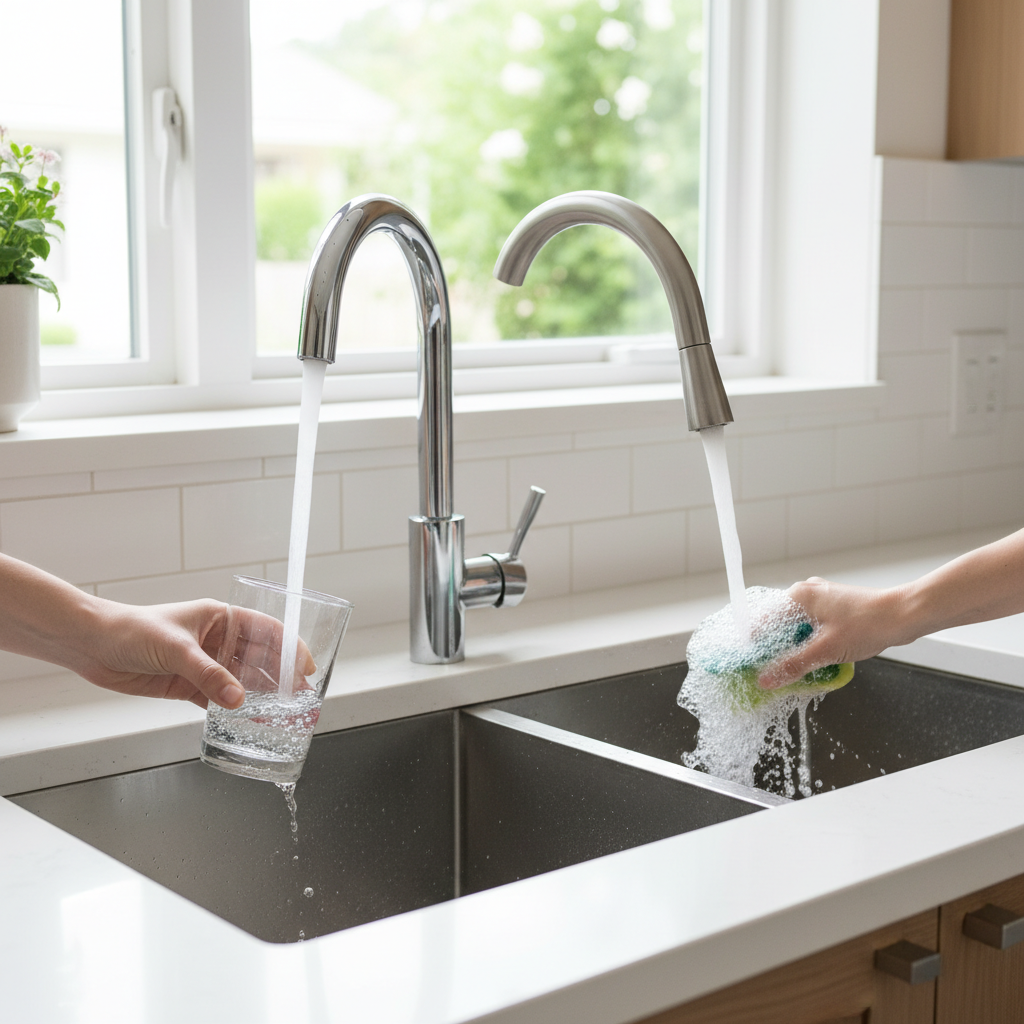
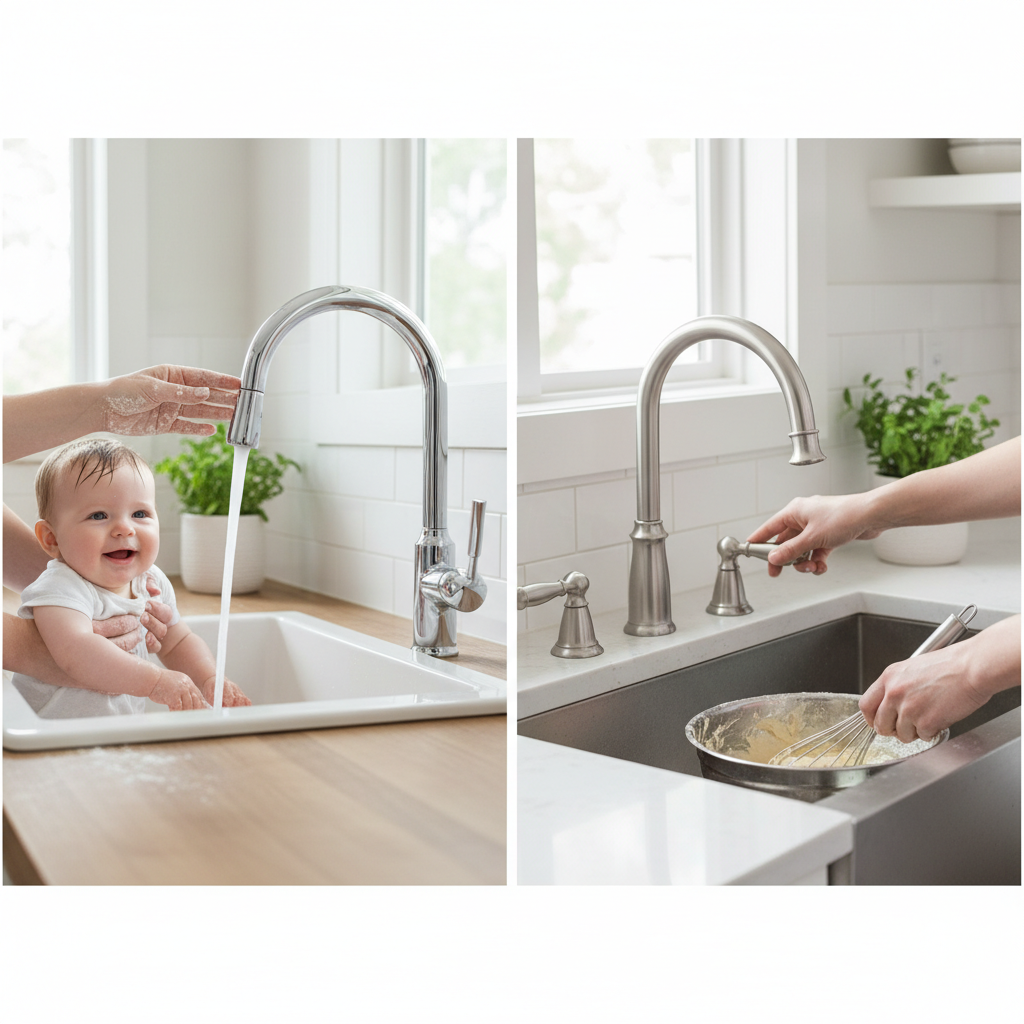
Choosing the right faucet for your home goes beyond aesthetics; it’s about optimizing functionality for your daily routine. With hands covered in dough or a baby needing a quick wash, the debate between single-handle and double-handle faucets quickly shifts from style to practicality, especially concerning water pressure and temperature control. Understanding the core mechanics and subtle differences can transform a frustrating daily task into a seamless experience. This comprehensive guide will help you navigate these choices, ensuring your faucet perfectly meets your needs and budget.
Understanding Faucet Mechanics: How Water Pressure Works
Before diving into handle types, it’s crucial to grasp how faucets interact with your home’s water pressure. Faucets don’t generate water pressure; instead, they regulate the flow of water supplied by your plumbing system. The perceived “pressure” you feel at the spout is often a combination of the actual water pressure from your main supply and the flow rate, which is typically measured in Gallons Per Minute (GPM).
At the heart of every faucet is a valve system—be it a cartridge, ceramic disc, compression, or ball valve—that controls the mixing of hot and cold water and the volume released through the spout. Components like aerators at the tip of the spout also play a vital role, mixing air with water to create a consistent, smooth stream while often reducing water consumption. When these internal mechanisms or external components become obstructed, it directly impacts the water’s flow and the sensation of pressure.
Single-Handle Faucets: The Modern Choice
Single-handle faucets have become a hallmark of contemporary design, revered for their sleek lines and intuitive operation. They are a popular choice in kitchens and bathrooms alike, offering a minimalist aesthetic that complements modern spaces.
What Are Single-Handle Faucets?
|
Our Picks for the Best High pressure faucet in 2026
As an Amazon Associate I earn from qualifying purchases.
|
||
| Num | Product | Action |
|---|---|---|
| 1 | Chrome Brass Wall Mount Faucet, Single Cold Water Utility Tap, G 1/2 Inch Connection for Laundry Sink, Mop Basin, Garage, Outdoor Garden Hose |

|
| 2 | AIMADI Kitchen Faucet with Pull Down Sprayer,Commercial Stainless Steel Pull Down Sprayer Kitchen Faucet Single Hole Single Handle RV Laundry Outdoor Kitchen Sink Faucets |
|
| 3 | Kitchen Faucet with Pull Down Sprayer, High Arc Single Handle Brushed Nickel Stainless Steel 1 or 3 Hole Faucet for Kitchen Sink, Farmhouse, RV, Laundry, Bar, Outdoor |
|
| 4 | 3-Adjustable Water Pressure Faucet with Booster Shower Heads - ABS Material, Extended Spout, Anti-Splash, Universal Connector |
|
| 5 | TMOK 1/2" x 3/4" Brass Outdoor Faucet & High Pressure Jet Nozzle with Leakproof Shut Off Valve, Heavy-Duty Brass 3/4" GHT Hose Nozzle with 4 Garden Hose Rubber Washers, Teflon Tape |
|
| 6 | 2PCS 360 Degree Swivel Faucet Aerator Deluxe Water Saving Faucet Sprayer Water Saving Bubbler Pressurized Faucet Filter Kitchen Accessories (360 Degree, Count, 2) |
|
| 7 | FORIOUS Kitchen Faucets with Pull Down Sprayer, Brushed Nickel, High Arc Single Handle Classic Stainless Steel Sink Faucet 1 or 3 Hole, Suitable for Farmhouse Camper Laundry Rv Bar |
|
| 8 | Inchant Outdoor Kitchen Sink Faucet - 360° Rotatable Single Hole Single Handle Cold Water Kitchen Faucet Flexible Neck Laundry Room Tap Bar Garden Outdoor Faucet, Deck Mount Chrome Finish |
|
| 9 | GIMILI Kitchen Faucet with Pull Down Sprayer Single Handle High Pressure Kitchen Sink Faucet Commercial Double-Headed Stainless Steel Kitchen Faucets Brushed Nickel and Black |
|
| 10 | TIORIY Kitchen Faucet Head with 15 Adapters, High Pressure 3 Functions Pull Down Kitchen Spray Head Replacement, Pull Out Kitchen Sink Sprayer Nozzle, Brushed Gold, ABS |
|
A single-handle faucet features one lever that governs both water temperature and flow. Typically, moving the lever left or right adjusts the temperature from cold to hot, while lifting it up or pushing it down controls the water volume and effectively the “pressure” of the stream. This all-in-one control makes them incredibly user-friendly for single-handed tasks.
Internally, these faucets often rely on a ceramic disc or ball valve cartridge. This cartridge precisely blends the hot and cold water from separate supply lines into a single stream, sending it up to the spout. The position of the handle dictates the mix of hot and cold water and how wide the internal ports open, thus controlling both temperature and flow.
Advantages of Single-Handle Faucets
The primary appeal of single-handle faucets lies in their ease of use. With just one hand, you can quickly adjust temperature and flow, a significant advantage when your other hand is occupied. Their compact design requires only a single hole for installation, making them ideal for smaller sinks or limited countertop space. Aesthetically, they lend a modern, streamlined look that is easy to clean due to fewer crevices. Many contemporary single-handle models also incorporate features like pull-down sprayers and temporary flow boosts, enhancing functionality.
Disadvantages of Single-Handle Faucets
While convenient, single-handle faucets can sometimes present challenges. Achieving precise temperature control can be more difficult than with two separate handles, especially if your home’s water pressure fluctuates or with older plumbing systems. If the internal cartridge—the central control mechanism—malfunctions, it often requires a more complex repair or replacement. This can lead to water pressure inconsistency if the cartridge is faulty or clogged. Furthermore, if that single mechanism fails, the entire faucet’s operation is compromised until repaired.
Double-Handle Faucets: Classic Control
Double-handle faucets evoke a sense of traditional elegance and offer a different approach to water control. They are a timeless option often found in classic or vintage-inspired bathrooms and kitchens.
What Are Double-Handle Faucets?
As their name suggests, double-handle faucets feature two distinct handles: one for hot water and one for cold. Users manually operate both handles to achieve their desired temperature and flow. Each handle controls a separate valve (typically compression, ceramic disc, or cartridge valves) dedicated to its respective water line. The hot and cold water then combine within the faucet body before exiting through the spout.
Advantages of Double-Handle Faucets
The standout benefit of double-handle faucets is their precise temperature control. With independent controls for hot and cold, you can meticulously fine-tune the water mix to your exact preference. This precision can be particularly beneficial for tasks requiring specific water temperatures. From a design perspective, they offer a classic, balanced aesthetic that complements a wide range of traditional and transitional interiors. Another subtle advantage is a form of built-in redundancy: if one handle or valve experiences an issue, the other side may still be functional, offering a temporary solution.
Disadvantages of Double-Handle Faucets
The main drawback of double-handle faucets is the need for two-handed operation, which can be inconvenient when your hands are full. Their design also requires more countertop or sink space, necessitating multiple holes for installation, making them less suitable for compact areas. With more visible components, they may accumulate more grime and require slightly more effort to clean thoroughly compared to their single-handle counterparts.
Pressure Performance: A Direct Comparison
When evaluating single-handle versus double-handle faucets, their impact on water pressure and flow is a critical consideration. It’s not necessarily that one type inherently delivers “higher” pressure, but rather how they manage the existing pressure and allow for user control.
Single-handle faucets, with their integrated mixing cartridge, blend hot and cold water before it reaches the spout. The flow rate is controlled by how much the cartridge opens to allow water through. While convenient, the internal design of some single-handle models may introduce a slight restriction, which could be perceived as marginally lower flow compared to a fully open double-handle system if not designed efficiently. However, many modern single-handle faucets are engineered to provide excellent flow rates, often limited by federally mandated GPM restrictions rather than the handle mechanism itself. Some advanced single-handle models even incorporate pressure-balancing features, particularly in shower valves, to maintain a consistent water temperature despite fluctuations in hot or cold supply pressure.
Double-handle faucets offer separate pathways for hot and cold water, which merge just before the spout. This design allows for independent control over each supply, potentially providing a sensation of more robust flow when both handles are fully open. The precision in temperature control also means you can isolate hot or cold water completely, which might be useful in certain scenarios. However, achieving a desired mixed temperature often requires adjusting both handles simultaneously, which can be less efficient in terms of water usage if you’re trying to quickly find a comfortable temperature.
In essence, a well-designed faucet of either type, coupled with healthy plumbing, should deliver satisfying water flow. The perceived difference in “pressure” often boils down to the efficiency of the internal valve system and the ease with which users can adjust the flow to their preference.
| Feature | Single-Handle Faucet | Double-Handle Faucet |
|---|---|---|
| Ease of Use | One-handed operation, highly convenient | Two-handed operation, can be cumbersome |
| Temperature Precision | Good, but can be less precise than dual controls | Excellent, allows fine-tuning |
| Water Flow/Pressure Control | Intuitive up/down for flow, single mixing point | Independent control for hot/cold flow |
| Installation | Typically one hole, simpler installation | Requires multiple holes, more complex installation |
| Maintenance | Fewer external parts to clean, cartridge repairs | More external parts, individual valve repairs |
| Aesthetics | Modern, minimalist, sleek | Classic, traditional, symmetrical |
| Space Requirements | Space-saving, ideal for compact areas | Requires more counter/sink space |
Factors Beyond the Handles: What Really Affects Your Faucet’s Pressure
While the faucet’s design plays a role, several external factors significantly influence the water pressure you experience at the tap. Understanding these can help you diagnose and resolve low-pressure issues, regardless of your faucet type.
Your home’s main water pressure is the foundational factor. If the pressure entering your home is low, all your faucets will be affected. The condition and size of your plumbing pipes also matter. Older pipes, especially galvanized steel, can corrode and accumulate mineral deposits over time, restricting water flow and reducing pressure.
Inside the faucet itself, clogged aerators are a common culprit for diminished flow. The screen on the aerator can trap sediment and mineral buildup, easily impeding water flow. Similarly, the internal cartridge or valve of any faucet can become clogged with debris or mineral deposits, directly restricting the water’s path. Furthermore, partially closed shut-off valves located under your sink or behind your wall can significantly reduce flow to a specific faucet. Finally, some faucets come with flow restrictors mandated for water conservation; while beneficial, they can reduce the perceived force of the water stream.
Choosing Your Ideal Faucet: A Pressure-Conscious Guide
Selecting the perfect faucet requires a balance of functionality, aesthetics, and your home’s specific plumbing conditions.
- Assess Your Current Water Pressure: If you already experience low water pressure throughout your home, prioritize faucets known for efficient flow and consider addressing whole-house pressure issues.
- Consider Your Usage Needs: For busy kitchens where multitasking is common, the convenience of a single-handle faucet often outweighs the minor differences in pressure control. For bathrooms where precise temperature is paramount, a double-handle faucet might be preferred.
- Budget and Brand Reputation: Investing in a reputable brand often translates to better quality internal components, which are crucial for consistent water flow and durability. Higher-quality cartridges and valves tend to maintain pressure better over time.
- Installation Considerations: The number of holes pre-drilled in your sink or countertop will influence your choice. Single-handle faucets typically require one hole, while double-handle models need three.
- Style Preferences: Modern, minimalist designs often feature single handles, while traditional or classic aesthetics lean towards double handles.
Installation and Maintenance for Optimal Faucet Pressure
Proper installation and regular maintenance are key to ensuring optimal water pressure and longevity for any faucet.
During installation, ensure that supply lines are not kinked or crimped, as this can immediately restrict water flow. Make sure all connections are secure but not overtightened, which could damage components.
For maintenance, regularly clean your faucet’s aerator. Simply unscrew it, rinse away any sediment, and use a soft brush or vinegar soak for stubborn mineral deposits. If you notice a persistent drop in pressure or temperature inconsistency, check the internal cartridge or valves. Over time, these can wear out or become clogged. Replacing a worn cartridge is a common repair that can restore full functionality and pressure. Always ensure your shut-off valves under the sink are fully open to allow maximum water flow to the faucet.
Common Pressure Issues and Troubleshooting
Encountering issues with your faucet’s water pressure can be frustrating, but many common problems have straightforward solutions.
If you experience low water pressure from a single faucet while others in your home operate normally, the problem is likely localized. Start by checking the aerator for clogs. If the aerator is clean, inspect the shut-off valves under the sink to ensure they are fully open. A clogged or faulty faucet cartridge is another frequent cause; mineral buildup or debris can restrict water flow through the cartridge.
Fluctuating temperature or pressure can often indicate an issue with the mixing valve or pressure-balancing mechanism, particularly in single-handle faucets. This might be due to sediment interfering with the cartridge’s ability to blend hot and cold water consistently, or a significant pressure imbalance in your hot and cold water supply lines. Addressing these issues usually involves cleaning or replacing the affected internal components.
When troubleshooting, always turn off the water supply to the faucet before attempting any repairs. If you’re unsure about diagnosing or fixing a problem, consulting a qualified plumber can prevent further damage and ensure your faucet operates efficiently.
Conclusion
The choice between a single-handle and a double-handle faucet is ultimately a personal one, influenced by a blend of functional needs, aesthetic preferences, and practical considerations for water pressure and temperature control. Single-handle faucets offer unmatched convenience and a sleek, modern look, ideal for busy households and contemporary designs. Double-handle faucets provide superior precision in temperature adjustment and a timeless aesthetic that complements traditional spaces.
Neither design inherently offers “better” water pressure, as both primarily regulate the flow from your home’s existing supply. The key lies in selecting a high-quality faucet, ensuring proper installation, and performing routine maintenance to keep internal components free from clogs. By considering your daily routines, design preferences, and the specific characteristics of your home’s plumbing, you can confidently choose the faucet that provides the perfect balance of style, ease, and consistent water flow for years to come.
Which faucet type best suits your everyday needs for precision and convenience?
Frequently Asked Questions
Do single-handle faucets provide less water pressure than double-handle ones?
Not necessarily. While single-handle faucets use a mixing cartridge that can theoretically introduce a slight restriction, both types primarily regulate existing water pressure. A well-designed faucet of either type, coupled with good home plumbing, will deliver satisfying flow, often limited by standard GPM regulations.
Can a clogged aerator really affect my faucet’s water pressure?
Yes, absolutely. The aerator, located at the tip of the faucet spout, has a screen that can easily trap mineral deposits and debris. A clogged aerator significantly restricts water flow, making the water stream appear weak or inconsistent.
How can I improve the water pressure of my single-handle kitchen faucet?
Start by cleaning the aerator. If that doesn’t help, check if the shut-off valves under the sink are fully open. A common issue is a clogged or worn-out internal cartridge, which may need cleaning or replacement to restore optimal flow.
Are double-handle faucets more durable due to separate components?
Durability depends more on the quality of materials and manufacturing than the number of handles. While a double-handle faucet might offer redundancy (one side could still work if the other fails), both types can last a long time with quality components and proper maintenance.
Is it possible to replace a double-handle faucet with a single-handle one?
Yes, it’s generally possible, but it requires addressing the extra holes in your sink or countertop. You might use an escutcheon plate (deck plate) to cover unused holes, or opt for a new sink or countertop with a single hole configuration.
Do flow restrictors affect faucet water pressure?
Flow restrictors are designed to reduce the volume of water (GPM) that flows out of a faucet for water conservation purposes. While they don’t reduce the actual water pressure in your pipes, they do reduce the flow rate, which can make the water stream feel less forceful or impact its perceived “pressure.”
How often should I perform maintenance on my faucet to maintain pressure?
Regular maintenance, such as cleaning the aerator, is recommended every few months, or whenever you notice a decrease in water flow. If you have hard water, more frequent cleaning might be necessary to prevent mineral buildup in the aerator and cartridge.