Are you tired of frustratingly weak water flow from your kitchen or bathroom faucets? You’re not alone. Low water pressure can turn simple tasks into chores, but the good news is that a simple, effective solution exists: the faucet aerator. These small yet powerful devices can instantly transform your water stream, boosting its perceived pressure and efficiency without costly plumbing overhauls. This comprehensive guide will walk you through everything you need to know about faucet aerators, from how they work to choosing the best one for your home.
What is a Faucet Aerator?
|
Our Picks for the Best High pressure faucet in 2026
As an Amazon Associate I earn from qualifying purchases.
|
||
| Num | Product | Action |
|---|---|---|
| 1 | 2PCS 360 Degree Swivel Faucet Aerator Deluxe Water Saving Faucet Sprayer Water Saving Bubbler Pressurized Faucet Filter Kitchen Accessories (360 Degree, Count, 2) |

|
| 2 | 3-Adjustable Water Pressure Faucet with Booster Shower Heads - ABS Material, Extended Spout, Anti-Splash, Universal Connector |
|
| 3 | GIMILI Kitchen Faucet with Pull Down Sprayer Single Handle High Pressure Kitchen Sink Faucet Commercial Double-Headed Stainless Steel Kitchen Faucets Brushed Nickel and Black |
|
| 4 | Kitchen Faucet with Pull Down Sprayer, High Arc Single Handle Brushed Nickel Stainless Steel 1 or 3 Hole Faucet for Kitchen Sink, Farmhouse, RV, Laundry, Bar, Outdoor |
|
| 5 | Inchant Outdoor Kitchen Sink Faucet - 360° Rotatable Single Hole Single Handle Cold Water Kitchen Faucet Flexible Neck Laundry Room Tap Bar Garden Outdoor Faucet, Deck Mount Chrome Finish |
|
| 6 | TMOK 1/2" x 3/4" Brass Outdoor Faucet & High Pressure Jet Nozzle with Leakproof Shut Off Valve, Heavy-Duty Brass 3/4" GHT Hose Nozzle with 4 Garden Hose Rubber Washers, Teflon Tape |
|
| 7 | Chrome Brass Wall Mount Faucet, Single Cold Water Utility Tap, G 1/2 Inch Connection for Laundry Sink, Mop Basin, Garage, Outdoor Garden Hose |
|
| 8 | TIORIY Kitchen Faucet Head with 15 Adapters, High Pressure 3 Functions Pull Down Kitchen Spray Head Replacement, Pull Out Kitchen Sink Sprayer Nozzle, Brushed Gold, ABS |
|
| 9 | AIMADI Kitchen Faucet with Pull Down Sprayer,Commercial Stainless Steel Pull Down Sprayer Kitchen Faucet Single Hole Single Handle RV Laundry Outdoor Kitchen Sink Faucets |
|
| 10 | FORIOUS Kitchen Faucets with Pull Down Sprayer, Brushed Nickel, High Arc Single Handle Classic Stainless Steel Sink Faucet 1 or 3 Hole, Suitable for Farmhouse Camper Laundry Rv Bar |
|
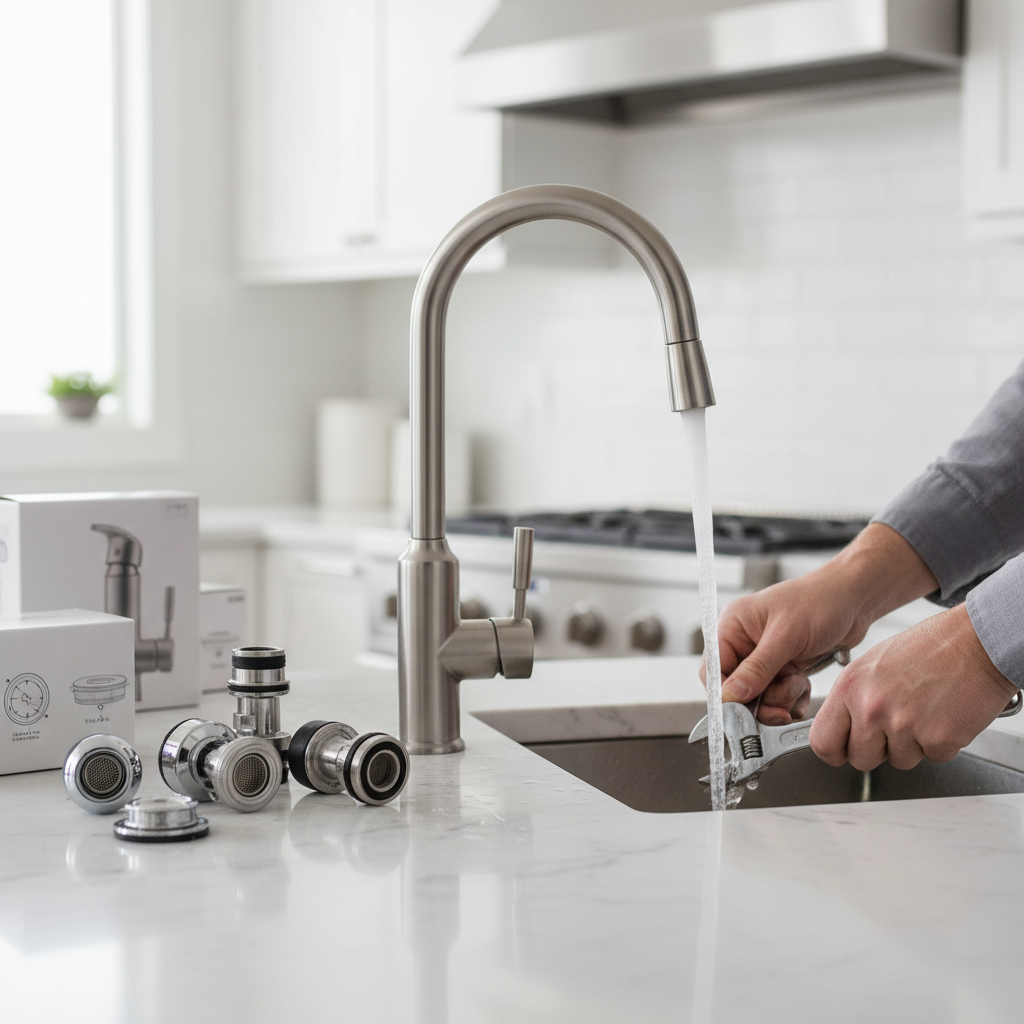
A faucet aerator is a small, round component typically screwed onto the tip of your faucet spout. Its primary function is to mix air with the water stream as it exits the tap. This process, known as aeration, breaks the single stream of water into numerous tiny droplets, creating a larger, whiter, and softer stream that feels more forceful than it actually is. This ingenious design doesn’t increase the total volume of water flowing through your pipes but significantly enhances the perception of water pressure.
The benefits of using a faucet aerator extend beyond just improved water flow. They are crucial for water conservation, reducing water usage by up to 30% to 50% by lowering the flow rate (gallons per minute, or GPM) while maintaining effective pressure. This not only helps the environment but also leads to noticeable savings on your utility bills, especially for hot water, as less heated water is used. Aerators also effectively reduce splashing in your sink, filter out small debris, and can even lower faucet noise, contributing to a more pleasant and efficient washing experience.
Types of Faucet Aerators
Faucet aerators come in various types, each designed to meet specific needs in terms of water flow, conservation, and aesthetics. Understanding these distinctions is key to selecting the perfect aerator for your home.
By Aeration Stream
The way an aerator processes water determines its stream type, impacting how the water feels and performs.
- Aerated Stream: This is the most common type for residential use. It actively introduces air into the water, producing a soft, champagne-like, non-splashing stream that is opaque (white) in appearance. This stream feels gentle yet full, making it ideal for everyday tasks like handwashing and light rinsing.
- Laminar Stream: Unlike aerated streams, laminar flow aerators do not mix air with water. Instead, they deliver a crystal-clear, non-splashing, solid column of water. These are often preferred in healthcare facilities or areas where aeration is undesirable, providing a strong, uninterrupted flow.
- Spray Stream (Multiple Laminar): When the existing water pressure or flow rate is very low, a spray stream aerator can be highly effective. It produces a miniature shower pattern, ensuring full coverage for washing hands even with minimal water flow. These are commonly seen in public restrooms and can be beneficial in kitchens with extremely low pressure.
By Thread Type and Style
Aerators also vary by how they attach to your faucet, which is determined by their thread type and housing.
- Male Thread Aerators: These aerators have external threads that screw into a faucet spout with internal threads.
- Female Thread Aerators: Conversely, female aerators have internal threads that screw onto a faucet spout with external threads.
- Dual-Thread Aerators: For maximum versatility, some aerators are designed with both male and female threads, allowing them to fit a wider range of standard faucets.
- Cache/Hidden Aerators: These sleek aerators sit recessed inside the faucet spout, creating a cleaner, more integrated look. They often require a special key for installation or removal, which is typically included in aerator kits.
- Aerators with Housing: Most modern replaceable aerators include a housing that matches the faucet’s finish, containing the aerator structure and threads for easy attachment.
- Aerators without Housing (Drop-in): These inserts fit directly into the end of the faucet or into existing housing, often requiring precise sizing for a secure fit.
By Flow Rate (GPM)
Flow rate, measured in gallons per minute (GPM), indicates how much water an aerator allows to pass through.
- Standard Flow: Many older or less efficient aerators operate at a standard flow rate, often around 2.2 GPM.
- Low Flow (Water-Saving): Modern, water-efficient aerators are designed to significantly reduce GPM, often ranging from 0.5 GPM to 1.5 GPM, without compromising the perceived pressure. Look for WaterSense certified aerators, as these are independently tested to ensure both water efficiency and performance. Different flow rates are suited for different tasks; lower GPM is ideal for handwashing, while slightly higher GPM might be preferred for filling large pots.
Comparing Faucet Aerator Types
Choosing the right aerator involves weighing the characteristics of each type against your specific needs. Here’s a detailed comparison to help you decide:
| Feature | Aerated Stream | Laminar Stream | Spray Stream (Multiple Laminar) |
|---|---|---|---|
| Water Flow | Mixes water with air | Solid, non-aerated stream | Fine shower-like spray |
| Appearance | Opaque, white, soft, champagne-like | Crystal clear | Fine droplets, wide coverage |
| Perceived Pressure | High, feels full and soft | High, feels strong and direct | Moderate to high, ensures coverage with low flow |
| Splash Reduction | Excellent, very little splashing | Excellent, no splashing | Good, designed for coverage rather than forceful impact |
| Water Savings | High, reduces GPM by introducing air | Moderate, reduces GPM without aeration | High, designed for efficiency in very low flow settings |
| Ideal Use | Residential bathrooms and kitchens, general use | Healthcare, high-flow applications, filling large containers | Public restrooms, very low water pressure scenarios |
How to Choose the Right Faucet Aerator
Selecting the best faucet aerator to boost your flow instantly requires considering several key factors:
- Assess Your Current Water Pressure: If your water pressure is extremely low, a spray or high-efficiency aerated stream might be most effective. If it’s just adequate but you want more “oomph,” a standard aerated aerator often suffices.
- Identify Your Faucet Type: Determine if your faucet has male (external) or female (internal) threads, and measure the diameter. Common sizes include M16.5, M18.5, M21.5, M22, M24, and M28. For hidden aerators, you’ll need a specific removal key. Dual-thread aerators offer flexibility if you’re unsure.
- Consider Your Usage Needs:
- Kitchen Sink: You might prefer a versatile aerator, perhaps one with dual-functionality (aerated for washing, strong spray for rinsing).
- Bathroom Sink: Aerated streams are typically preferred for handwashing due to their soft, non-splashing nature.
- Specific Tasks: If you frequently fill large pots, a laminar flow or a higher GPM aerator might be more practical, as lower GPM aerators can take longer to fill.
- Desired Flow Rate (GPM): Choose a GPM that balances water conservation with your preferred water sensation. WaterSense certified options ensure efficiency.
- Material and Durability: Opt for aerators made from durable materials like solid brass, ABS plastic, or stainless steel to resist corrosion and wear. Chrome plating can enhance rust resistance and aesthetics.
- Ease of Installation: Most aerators are simple screw-in devices. Some kits include removal wrenches or tools, which can be helpful, especially for cache aerators or stubborn old ones.
“A well-chosen faucet aerator is more than just a water-saving gadget; it’s a small investment that dramatically improves your daily interaction with water, making every wash and rinse more efficient and enjoyable.” – Admin, reviewreco.com, Kitchen & Bath Fixture Expert
Top Faucet Aerators for Instant Flow Boost
Based on their performance, versatility, and user satisfaction, here are some top choices that can instantly improve your faucet’s water flow:
- Multi-Size Faucet Cache Aerator Kits: These kits typically include a variety of aerator sizes (e.g., 16.5mm, 18.5mm, 21.5mm, 24mm) and removal wrenches. They are excellent for homeowners who need to replace multiple aerators or are unsure of their exact size. Made from durable ABS plastic, they resist wear and corrosion.
- Pros: Versatile compatibility, easy installation with included tools, cost-effective for multiple replacements.
- Cons: Plastic tools might not be suitable for very tight aerators, sizing issues reported by some users.
- 2.2 GPM Bathroom Sink Aerators with Brass Shell: These standard replacement aerators offer a robust flow rate suitable for most bathroom sinks, providing a steady stream while preventing splashing. They are often constructed from solid brass and stainless steel for durability.
- Pros: Durable materials, easy installation, good balance of flow and water saving.
- Cons: Higher flow rate might not be ideal for maximum water conservation, some reports of splashing.
- Hibbent NSF/ANSI/CAN 61 Certified Faucet Aerator with 360° Twist: This type of aerator offers dual functions (soft bubble stream and strong spray) and a swivel feature for enhanced versatility, particularly in kitchen sinks. NSF certified ensures quality and safety.
- Pros: Dual-functionality, 360° swivel for convenience, durable brass construction, certified safe.
- Cons: Swivel range might be limited for some users, inconsistent water pressure reported occasionally.
- PCA Dual-Stream Aerators: These offer both aerated and spray stream types, providing flexibility for different tasks within one unit. They often come with housing and are designed for standard faucets.
- Pros: Dual stream options, standard sizing, good quality.
- Cons: May be pricier than single-stream options, compatibility needs careful checking.
- Caché® Honeycomb Hidden Threaded Aerators: Ideal for minimalist faucet designs, these aerators are discreetly recessed within the spout. They are available in various sizes (e.g., Tom Thumb, Junior) and stream types (aerated or laminar).
- Pros: Clean, integrated look, available in different stream types.
- Cons: Requires a special key for removal/installation, less readily identifiable for replacement.
Installation and Usage of Faucet Aerators
Installing or replacing a faucet aerator is a straightforward DIY task that anyone can accomplish.
Basic Installation Steps:
- Turn off the Water: While often not strictly necessary for aerator replacement, turning off the water supply to the faucet can prevent accidental spills, especially if the aerator is old and difficult to remove.
- Remove the Old Aerator: Most aerators can be unscrewed by hand by turning them counter-clockwise. If it’s too tight due to mineral buildup, you can use a pair of pliers, being careful to wrap the aerator (or faucet) with a cloth to prevent scratching the finish. For cache aerators, use the specific removal key.
- Clean the Faucet Spout: Before installing the new aerator, clean any debris or mineral buildup from the faucet’s threads or interior. A small brush and vinegar can be effective.
- Insert the New Aerator: Ensure the rubber gasket is properly seated within the new aerator. Screw the new aerator clockwise onto or into the faucet spout.
- Hand-Tighten: Tighten the aerator by hand until snug. Avoid over-tightening with tools, as this can damage the aerator or faucet threads.
- Test for Leaks and Flow: Turn on the water and check for any leaks around the aerator. Observe the water flow to ensure it’s steady and consistent, adjusting the tightness if necessary.
Maintenance Tips for Faucet Aerators
Regular maintenance is crucial to keep your faucet aerators performing optimally and to prevent common issues like reduced flow or erratic spraying.
- Regular Cleaning: Aim to clean your faucet aerators every six months, or more frequently in areas with hard water. Mineral deposits (limescale), sediment, and debris can accumulate in the small mesh screens, restricting water flow. To clean, unscrew the aerator and soak its components in a solution of equal parts white vinegar and water for a few hours or overnight. Use a small brush (like an old toothbrush) to gently scrub away any remaining residue.
- Inspect for Damage: While cleaning, inspect the aerator’s components, especially the rubber gasket. If the gasket is cracked or worn, it can lead to leaks and should be replaced.
- When to Replace: Even with regular cleaning, aerators can wear out or become irreparably clogged. Consider replacing your aerator every 1-5 years, or if you notice persistent low pressure, an uneven or misdirected stream, or if it drips even when tightly attached. Replacing a faulty aerator is a simple and cost-effective way to restore optimal water flow and efficiency.
Major Faucet Aerator Brands
While many aerators are universal in size, several major faucet brands produce their own specific aerator types or are commonly associated with certain fittings.
- Moen: Often features female housing aerators, with a wide variety to suit their diverse faucet styles.
- Pfister: Known for diverse aerator designs that adapt to their extensive faucet range, offering various thread sizes.
- Kohler: Typically uses male-threaded housing with aerator inserts, allowing for easy upgrades.
- Delta: A popular choice for modular and efficient faucets, Delta aerators tend towards male housing models, though styles can vary.
- American Standard: Offers a broad range of faucets, with their aerators often featuring female thread housing.
- Peerless: A Delta partner, Peerless faucets frequently utilize female thread housing aerators.
You can often find replacement aerators compatible with these major brands from specialized aerator retailers.
Where to Buy Genuine Faucet Aerators
To ensure you’re getting a quality product that fits correctly and performs as expected, it’s essential to purchase genuine faucet aerators from reputable sources.
- Specialized Online Retailers: Websites dedicated solely to faucet parts and aerators, like Aerator.com, often provide extensive selections, helpful sizing guides, and tools to identify the correct replacement.
- Major Home Improvement Stores: Large hardware chains typically carry a variety of universal and brand-specific aerators. Look for knowledgeable staff who can help you identify the right type and size.
- Plumbing Supply Stores: For more specialized or commercial-grade aerators, a dedicated plumbing supply store can offer expert advice and a broader range of professional-grade options.
- Manufacturer Websites: If you know your faucet’s brand and model, checking the manufacturer’s official website is a reliable way to find original replacement parts.
When purchasing, always double-check the product specifications against your faucet’s requirements (thread type, size, GPM) to ensure compatibility.
Conclusion
A faucet aerator might be a small component, but its impact on your daily water use is significant. By mixing air with water, these clever devices instantly boost the perceived flow, reduce splashing, and conserve precious water, leading to lower utility bills and a more enjoyable experience. Whether you’re dealing with naturally low water pressure or simply aiming for greater efficiency, choosing the right aerator and maintaining it regularly can revitalize your faucets. Don’t let a weak stream dampen your day—upgrade your aerators and experience the instant flow boost you deserve. What improvement will you notice first after installing your new faucet aerator?
Common Questions
Are all faucet aerators universal?
No, not all faucet aerators are universal. They come in various sizes (e.g., junior, standard, Tom Thumb) and thread types (male, female, dual-thread, hidden/cache) to fit different faucet models. It’s crucial to identify your faucet’s specific requirements for a proper fit.
Can an aerator truly increase water pressure?
A faucet aerator doesn’t increase the actual water pressure from your home’s supply. Instead, it creates the perception of higher pressure by mixing air with the water, breaking the stream into many tiny droplets. This results in a fuller, more forceful-feeling stream even with less water.
How often should I clean or replace my aerator?
It’s recommended to clean your faucet aerator every six months to remove mineral buildup and debris that can impede flow. You should consider replacing it every 1-5 years, or sooner if you notice persistent low flow, erratic splashing, or if it’s damaged and cannot be effectively cleaned.
What does GPM mean when referring to aerators?
GPM stands for Gallons Per Minute, which is a measurement of the water flow rate from your faucet. Faucet aerators are rated by their GPM, and choosing a lower GPM aerator (e.g., 0.5 to 1.5 GPM) can significantly reduce water consumption and save on utility bills.
Do aerators filter water?
While faucet aerators have small mesh screens that can trap larger debris and sediment particles from your water supply, their primary purpose is not filtration. They do not remove dissolved impurities, chemicals, or microscopic contaminants like a dedicated water filter would.