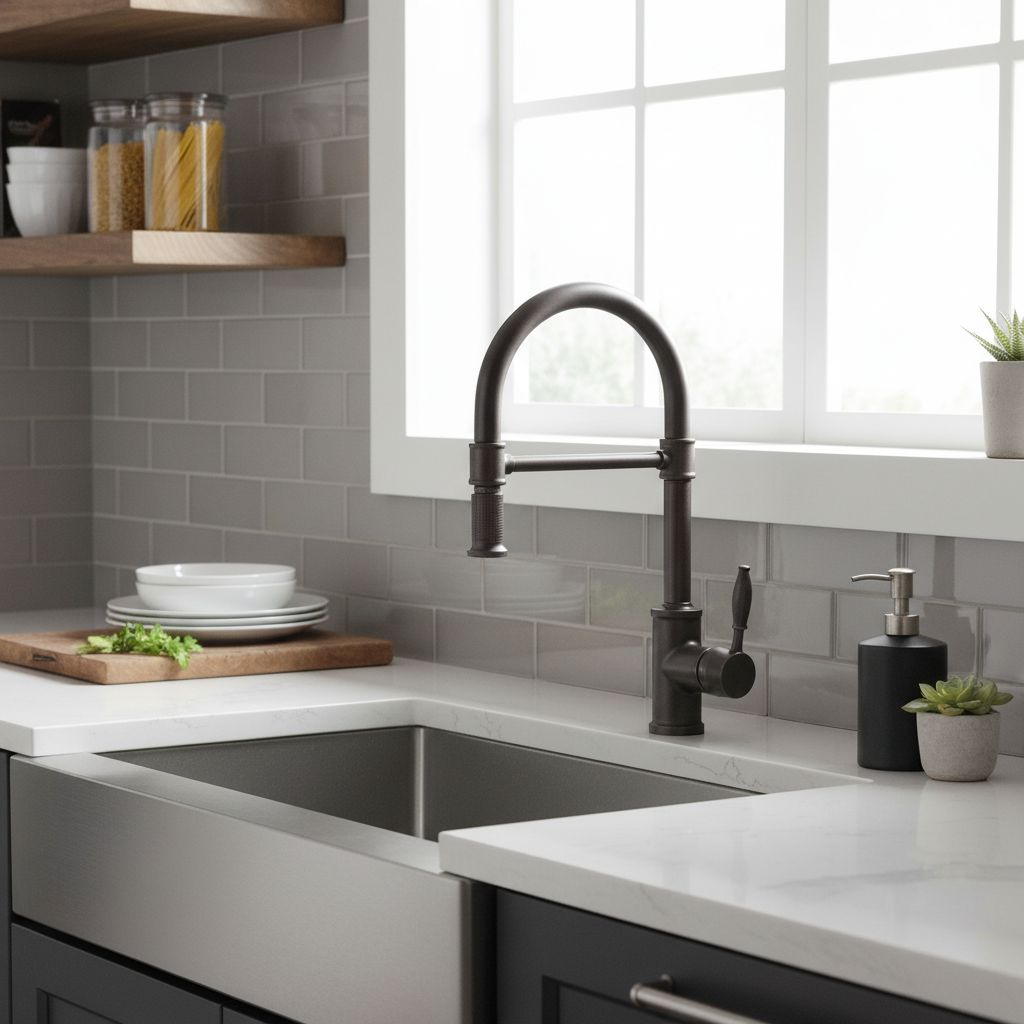
Choosing the right kitchen faucet is more than just picking a stylish fixture; it’s about investing in a hardworking tool that will serve your home for years. As an experienced technician with a decade in kitchen appliances, particularly high-pressure faucets, I’ve seen countless models, from budget-friendly options to high-end designs. This guide offers a deep dive into the generic testing methodologies we apply to any kitchen faucet, using the “Volola” as a representative model, to ensure you can identify a truly high-performing, durable, and user-friendly product. Forget the marketing hype—we’re focusing on what truly matters for daily use.
Understanding the Core Components of a Quality Kitchen Faucet
Before any testing begins, it’s essential to grasp the fundamental elements that define a faucet’s quality and performance. These components dictate its longevity, functionality, and overall user experience.
Materials and Build Quality
|
Our Picks for the Best High pressure faucet in 2026
As an Amazon Associate I earn from qualifying purchases.
|
||
| Num | Product | Action |
|---|---|---|
| 1 | 3-Adjustable Water Pressure Faucet with Booster Shower Heads - ABS Material, Extended Spout, Anti-Splash, Universal Connector |

|
| 2 | GIMILI Kitchen Faucet with Pull Down Sprayer Single Handle High Pressure Kitchen Sink Faucet Commercial Double-Headed Stainless Steel Kitchen Faucets Brushed Nickel and Black |
|
| 3 | 2PCS 360 Degree Swivel Faucet Aerator Deluxe Water Saving Faucet Sprayer Water Saving Bubbler Pressurized Faucet Filter Kitchen Accessories (360 Degree, Count, 2) |
|
| 4 | TIORIY Kitchen Faucet Head with 15 Adapters, High Pressure 3 Functions Pull Down Kitchen Spray Head Replacement, Pull Out Kitchen Sink Sprayer Nozzle, Brushed Gold, ABS |
|
| 5 | TMOK 1/2" x 3/4" Brass Outdoor Faucet & High Pressure Jet Nozzle with Leakproof Shut Off Valve, Heavy-Duty Brass 3/4" GHT Hose Nozzle with 4 Garden Hose Rubber Washers, Teflon Tape |
|
| 6 | AIMADI Kitchen Faucet with Pull Down Sprayer,Commercial Stainless Steel Pull Down Sprayer Kitchen Faucet Single Hole Single Handle RV Laundry Outdoor Kitchen Sink Faucets |
|
| 7 | Chrome Brass Wall Mount Faucet, Single Cold Water Utility Tap, G 1/2 Inch Connection for Laundry Sink, Mop Basin, Garage, Outdoor Garden Hose |
|
| 8 | Kitchen Faucet with Pull Down Sprayer, High Arc Single Handle Brushed Nickel Stainless Steel 1 or 3 Hole Faucet for Kitchen Sink, Farmhouse, RV, Laundry, Bar, Outdoor |
|
| 9 | FORIOUS Kitchen Faucets with Pull Down Sprayer, Brushed Nickel, High Arc Single Handle Classic Stainless Steel Sink Faucet 1 or 3 Hole, Suitable for Farmhouse Camper Laundry Rv Bar |
|
| 10 | Inchant Outdoor Kitchen Sink Faucet - 360° Rotatable Single Hole Single Handle Cold Water Kitchen Faucet Flexible Neck Laundry Room Tap Bar Garden Outdoor Faucet, Deck Mount Chrome Finish |
|
The foundation of any durable faucet lies in its construction materials. Solid brass and stainless steel are the industry benchmarks, renowned for their exceptional resistance to rust, corrosion, and everyday wear. Inferior materials like lightweight alloys or plastic might reduce cost but compromise durability significantly. The finish—be it chrome, brushed nickel, or matte black—isn’t just about aesthetics; it also contributes to resilience against water spots, fingerprints, and tarnishing. A high-quality finish should maintain its pristine appearance with minimal effort, resisting peeling or fading over time.
Design and Ergonomics
A faucet’s design extends beyond visual appeal to its practical usability. Consider the spout height and reach: an optimal design prevents splashing while offering ample clearance for large pots. The handle operation, whether single or dual, should be smooth, precise, and intuitive, allowing effortless control over water temperature and flow. An ergonomic design ensures comfort and efficiency, especially in a busy kitchen environment.
Key Features
Modern kitchen faucets come with an array of features that enhance functionality. Pull-down or pull-out sprayers offer versatility for rinsing dishes and cleaning the sink, with a smooth retraction mechanism being crucial. A pot filler spout can be a game-changer for serious cooks, eliminating the need to move heavy pots. The swivel range of the spout—ideally 360 degrees—ensures maximum coverage, while different spray modes (aerated stream, powerful spray) cater to various tasks.
The Volola Faucet: Our Generic Testing Methodology
When evaluating a faucet like the Volola, our approach is rooted in real-world performance. We apply a rigorous, generic testing methodology that assesses every critical aspect, ensuring unbiased and practical insights. Our experience has taught us that regardless of brand, a faucet must excel in specific functional areas to truly earn its place in your kitchen.
Performance Testing: Water Flow and Pressure
The most fundamental aspect of any faucet is its ability to deliver water effectively. Our testing focuses on both the volume and force of water.
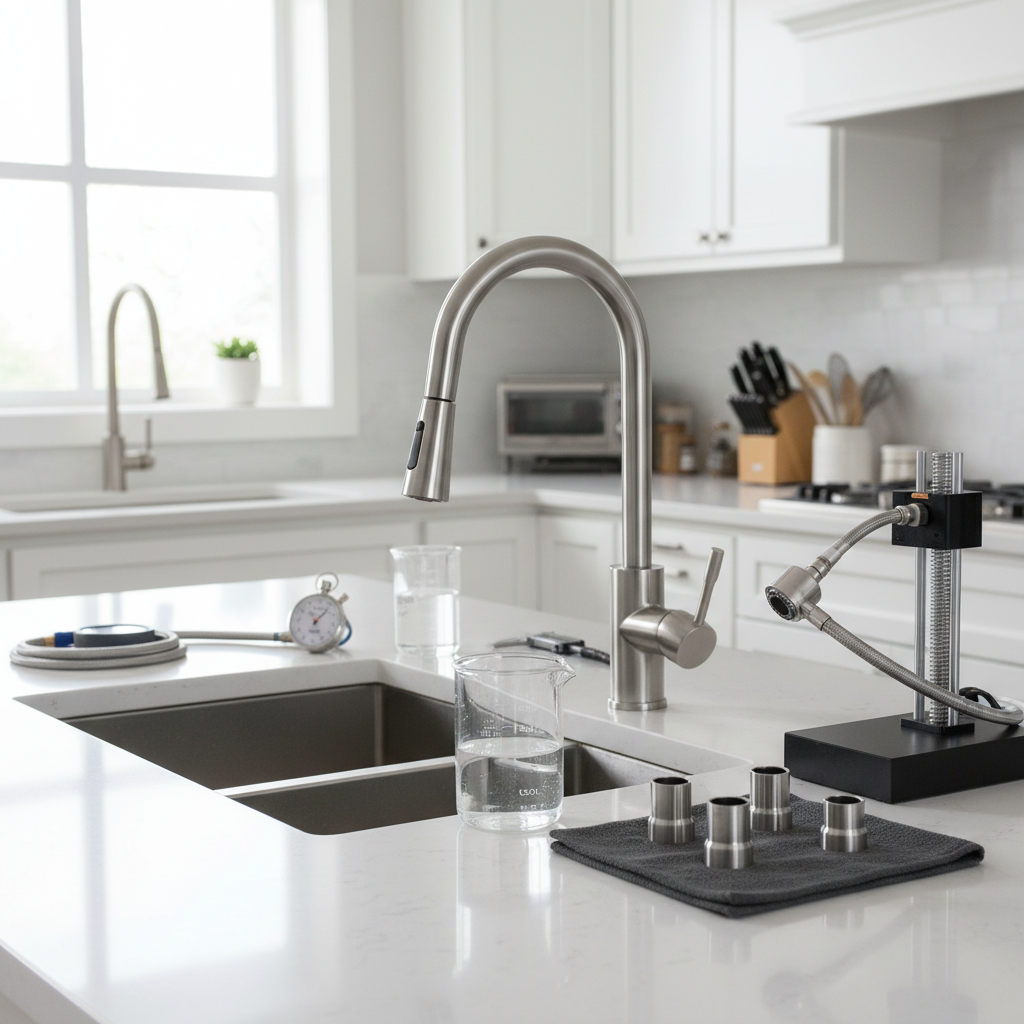
- Flow Rate (GPM) Testing: To measure the flow rate, we perform a simple yet effective “bucket test.” By timing how long it takes to fill a one-gallon container, we calculate the Gallons Per Minute (GPM). An ideal kitchen faucet typically delivers between 1.5 to 2.5 GPM, balancing efficiency with strong performance. A consistent flow rate is vital for efficient dishwashing and food preparation.
- Water Pressure (PSI) Assessment: Using a specialized water pressure gauge, we measure the Pounds per Square Inch (PSI). Residential properties generally operate best between 40 and 60 PSI. We observe how the faucet performs within this range and at the lower end, noting any significant drops in stream power or consistency.
- Low-Pressure Scenario Simulation: We often simulate low water pressure conditions to see how well the faucet’s internal design compensates. Some faucets are engineered to maintain a decent spray even when household pressure is suboptimal, a significant advantage for many homes.
- Temperature Control Accuracy: A crucial, often overlooked test involves assessing the precision of temperature mixing. The handle should allow for fine adjustments, maintaining a consistent temperature without sudden fluctuations between hot and cold water.
Usability and Ergonomics Evaluation
A faucet might look great, but if it’s not easy to use, it becomes a daily frustration. We scrutinize every interaction point.
- Handle Operation: We test the handle for smoothness, resistance, and precision. It should move effortlessly without stiffness or excessive play, providing intuitive control over both water flow and temperature. The ceramic disc cartridge, a hallmark of quality, plays a significant role here, offering drip-free performance and smooth operation for thousands of cycles.
- Sprayer Functionality: For models with a pull-down or pull-out sprayer, we evaluate the ease of extension and retraction, the flexibility of the hose, and the reliability of the docking mechanism. We also test the transition between different spray patterns (stream, spray) to ensure they engage smoothly and effectively without leaking. The reach of the sprayer is also a critical factor, determining its utility across the sink.
- Spout Swivel and Reach: A faucet should offer ample horizontal swivel range—ideally 360 degrees—to cover all areas of the sink. We assess the smoothness of the swivel action and whether the spout provides sufficient clearance for large pots and pans.
- Installation Ease (Generic Perspective): While not a direct user interaction, easy installation is a huge plus. We look for designs that feature clear instructions, standard fittings, and minimal parts, simplifying the DIY process or reducing plumber costs. Components like quick-connect hoses and top-mount installation features can greatly streamline the setup.
Durability and Maintenance Assessment
A faucet is a long-term investment. Our tests extend to predicting its lifespan and ease of upkeep.
- Material Durability: We meticulously inspect the faucet’s body and internal components for signs of robust construction. Solid brass or stainless steel body construction ensures resistance to stress and impact.
- Finish Longevity: We examine the finish for its resilience against common kitchen challenges—abrasion, cleaning chemicals, and constant moisture exposure. Spot-resistant finishes are highly valued for their ability to ward off fingerprints and water spots, keeping the faucet looking cleaner for longer.
- Leak Prevention: The quality of seals, O-rings, and especially the ceramic disc cartridge, are paramount in preventing leaks and drips. We look for components designed for a tight, reliable seal over years of use.
- Ease of Cleaning: A well-designed faucet minimizes crevices and complex shapes where grime can accumulate. Accessibility of the aerator for routine cleaning and descaling is also a key factor in long-term maintenance.
Common Issues and How the Volola (or any good faucet) Addresses Them
Every kitchen faucet, regardless of brand, can encounter common problems over time. A superior faucet, like a well-engineered Volola model, is designed to either prevent these issues or make them easy to resolve.
- Addressing Low Water Pressure: While home water pressure is external, a good faucet is designed to maximize the available flow. This often involves clear internal waterways and efficient aerators that don’t excessively restrict water, providing a strong spray even at the lower end of the recommended PSI.
- Preventing Leaks and Drips: The heart of leak prevention lies in high-quality ceramic disc cartridges and robust O-rings. These components are rigorously tested for durability, ensuring a tight seal over hundreds of thousands of cycles, virtually eliminating drips and persistent leaks.
- Combating Stiff Handles and Corrosion: Faucets made from premium materials like brass and equipped with ceramic cartridges naturally resist internal corrosion and mineral buildup that often lead to stiff handles. Easy access to internal components for lubrication or cleaning further extends smooth operation. Regular cleaning of the aerator is a simple maintenance step to prevent blockages caused by hard water.
Making an Informed Decision: What to Look for in Any Kitchen Faucet
After thorough generic testing, the takeaways are clear. When selecting any kitchen faucet, consider these critical aspects:
- Match your needs: Prioritize features that genuinely enhance your daily kitchen tasks.
- Material matters: Opt for solid brass or stainless steel for maximum durability and corrosion resistance.
- Check the flow: Ensure it meets your water pressure requirements and GPM expectations for efficient use.
- Ease of use: Smooth handle operation, reliable sprayer, and adequate spout reach are non-negotiable.
- Maintenance: A design that’s easy to clean and maintain will save you time and frustration in the long run.
Ultimately, a kitchen faucet is an investment in your home’s functionality and aesthetic. By understanding and applying these generic testing principles, you’ll be empowered to choose a faucet that not only looks great but performs flawlessly, day after day.
Frequently Asked Questions
What is a good water pressure for a kitchen faucet?
A good water pressure for a kitchen faucet, and residential plumbing in general, typically ranges between 40 and 60 PSI (Pounds per Square Inch). This range ensures a strong, steady flow for tasks like dishwashing without putting undue stress on your plumbing system.
How often should I clean my faucet aerator?
It’s recommended to clean your faucet aerator every 3 to 6 months. Mineral deposits from hard water can build up over time, restricting water flow and causing low pressure. Regular cleaning helps maintain optimal performance and extends the life of your faucet.
What materials are best for kitchen faucets?
The best materials for kitchen faucets are solid brass and stainless steel. Both offer excellent durability, resistance to corrosion, and longevity, making them ideal choices for a fixture that sees heavy daily use. They also tend to hold finishes better than cheaper alternatives.
Can I test faucet flow rate myself?
Yes, you can easily test your faucet’s flow rate (GPM) yourself using a simple “bucket test.” Place a one-gallon container under your faucet, turn it on fully, and time how long it takes to fill. Divide 60 by the number of seconds it took to fill the gallon to get your GPM.
What are common signs of a failing kitchen faucet?
Common signs of a failing kitchen faucet include persistent drips or leaks, a stiff or difficult-to-move handle, noticeable corrosion or discoloration, significantly reduced water pressure, and issues with the sprayer (e.g., poor retraction, inconsistent spray).