Have you ever finished a task feeling more fatigued than necessary, with an ache in your wrist or shoulder? The culprit might not be the task itself, but the design of your tool’s handle. In the world of hand tools, the choice between a side handle and a top handle configuration significantly impacts comfort, control, and overall safety. Understanding the ergonomic implications of each can transform your work experience, helping you choose the right tool to minimize strain and maximize efficiency.
Understanding Tool Ergonomics: The Foundation of Comfort and Control
Ergonomics in tool design is all about fitting the tool to the user, not the other way around. The primary goal is to maintain neutral wrist postures to reduce stress on joints and enable maximum strength with minimal effort. A well-designed handle considers factors like grip, weight distribution, and the direction of force, ensuring that your body works in its most natural alignment. Without proper ergonomic considerations, tools can lead to discomfort, fatigue, and even chronic musculoskeletal disorders.
For instance, the ideal handle diameter for a power grip, where fingers align towards the palm for maximum strength, is around 1.6 inches (41 mm), with an acceptable range of 1.25 to 2 inches (30-50 mm). Precision tasks, however, require smaller diameters, typically around 0.45 inches (12 mm). Furthermore, a handle should be long enough to span your entire palm, generally not less than 4 inches (100 mm), to avoid uncomfortable pressure points. Textured, non-slip, and compressible materials like rubber are preferred for handles, providing a secure grip while reducing the force needed to hold the tool.
The Side Handle Advantage: Power, Leverage, and Controlled Force
When we talk about a “side handle,” it often refers to a main grip that extends from the side or rear of a tool, positioning the hand typically behind or to the side of the working head. This configuration is sometimes called a “pistol grip” or a “rear handle” depending on the tool.
Ergonomic Benefits of Side Handles
|
Our Picks for the Best High pressure faucet in 2026
As an Amazon Associate I earn from qualifying purchases.
|
||
| Num | Product | Action |
|---|---|---|
| 1 | Chrome Brass Wall Mount Faucet, Single Cold Water Utility Tap, G 1/2 Inch Connection for Laundry Sink, Mop Basin, Garage, Outdoor Garden Hose |

|
| 2 | TMOK 1/2" x 3/4" Brass Outdoor Faucet & High Pressure Jet Nozzle with Leakproof Shut Off Valve, Heavy-Duty Brass 3/4" GHT Hose Nozzle with 4 Garden Hose Rubber Washers, Teflon Tape |
|
| 3 | Inchant Outdoor Kitchen Sink Faucet - 360° Rotatable Single Hole Single Handle Cold Water Kitchen Faucet Flexible Neck Laundry Room Tap Bar Garden Outdoor Faucet, Deck Mount Chrome Finish |
|
| 4 | FORIOUS Kitchen Faucets with Pull Down Sprayer, Brushed Nickel, High Arc Single Handle Classic Stainless Steel Sink Faucet 1 or 3 Hole, Suitable for Farmhouse Camper Laundry Rv Bar |
|
| 5 | Kitchen Faucet with Pull Down Sprayer, High Arc Single Handle Brushed Nickel Stainless Steel 1 or 3 Hole Faucet for Kitchen Sink, Farmhouse, RV, Laundry, Bar, Outdoor |
|
| 6 | 2PCS 360 Degree Swivel Faucet Aerator Deluxe Water Saving Faucet Sprayer Water Saving Bubbler Pressurized Faucet Filter Kitchen Accessories (360 Degree, Count, 2) |
|
| 7 | TIORIY Kitchen Faucet Head with 15 Adapters, High Pressure 3 Functions Pull Down Kitchen Spray Head Replacement, Pull Out Kitchen Sink Sprayer Nozzle, Brushed Gold, ABS |
|
| 8 | AIMADI Kitchen Faucet with Pull Down Sprayer,Commercial Stainless Steel Pull Down Sprayer Kitchen Faucet Single Hole Single Handle RV Laundry Outdoor Kitchen Sink Faucets |
|
| 9 | 3-Adjustable Water Pressure Faucet with Booster Shower Heads - ABS Material, Extended Spout, Anti-Splash, Universal Connector |
|
| 10 | GIMILI Kitchen Faucet with Pull Down Sprayer Single Handle High Pressure Kitchen Sink Faucet Commercial Double-Headed Stainless Steel Kitchen Faucets Brushed Nickel and Black |
|
Side handles are engineered to provide superior leverage and control, especially when the force needs to be exerted in a straight line, aligning with the forearm and wrist for horizontal applications. This design allows for a strong “power grip,” where your entire hand contributes to holding the tool, distributing pressure evenly across the palm. For tasks requiring sustained, linear force or guiding a tool along a path, the stability offered by a side handle is invaluable. Tools with longer bodies and a rear handle, such as some circular saws, provide more leverage to steer and accurately follow a cutting line.
Ideal Applications
Side handles are commonly found on tools like:
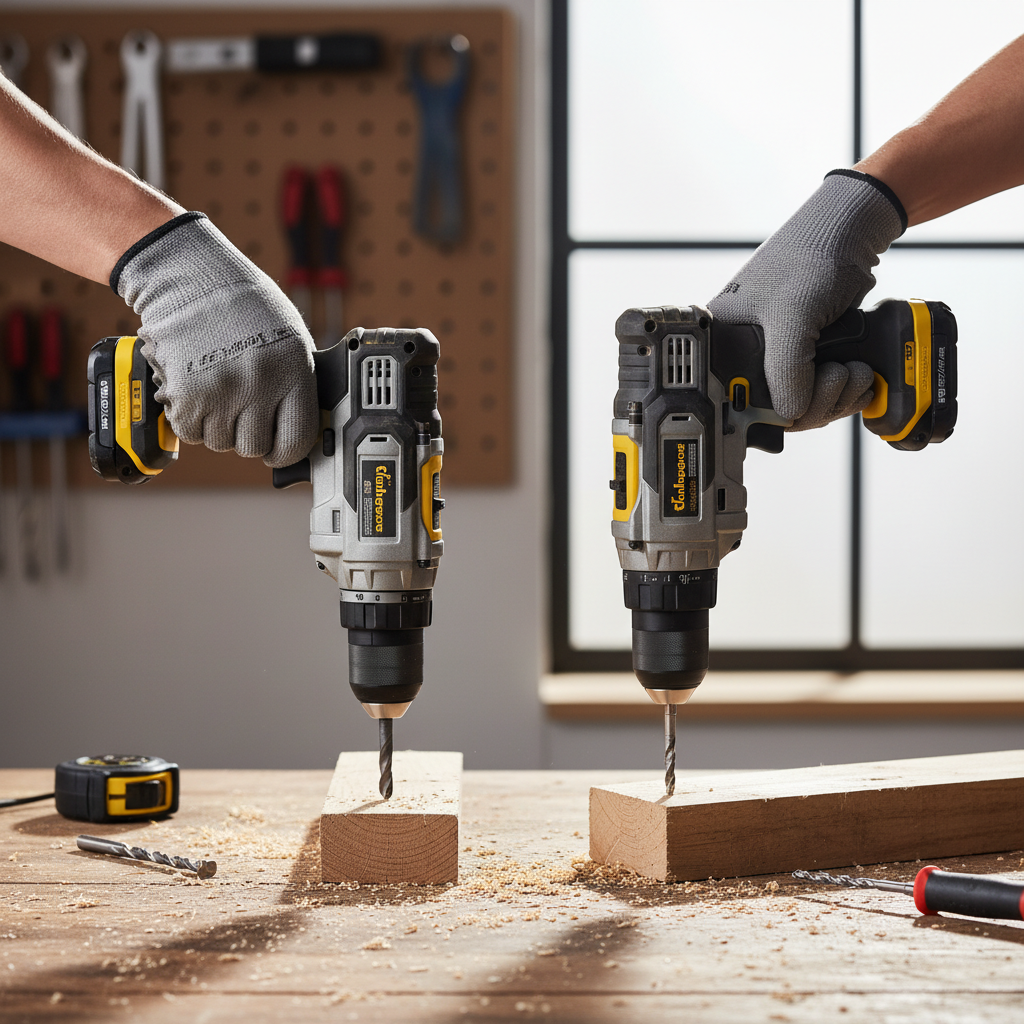
- Power Drills: The main grip often resembles a pistol grip, offering excellent control and force for drilling into various materials.
- Angle Grinders: The secondary side handle provides crucial stability and allows for a two-handed grip to manage the tool’s power and vibrations effectively.
- Circular Saws (Rear Handle): These designs offer enhanced control and stability for making long, straight cuts, particularly when working on the ground.
- Impact Drivers: The in-line or pistol grip handles provide direct force transmission for fastening applications.
Potential Drawbacks
While powerful, side handles can sometimes be bulkier or heavier, potentially leading to increased fatigue during prolonged use or limiting maneuverability in very tight spaces. If the tool’s design doesn’t promote a neutral wrist posture for the specific task, it can lead to wrist deviation and strain.
The Top Handle Advantage: Maneuverability, Precision, and Overhead Control
A “top handle” refers to a grip positioned directly on top of the tool, often centered over the tool’s body. This configuration shifts the hand’s position, offering a different set of ergonomic advantages.
Ergonomic Benefits of Top Handles
Top handles are designed for superior maneuverability and control, especially in confined spaces or when performing tasks that require unique angles, such as overhead work or intricate cuts. Their compact design often makes the tool lighter and easier to handle for precise movements. For instance, top-handle chainsaws are favored by arborists for their ability to be maneuvered easily within tree canopies and for overhead pruning. A top handle can also provide an additional point of stability for precise, low-angle tasks, as seen in camera rigs.
Ideal Applications
Top handles are prevalent on tools such as:
- Jigsaws: The top handle allows for precise guidance and control during intricate curve cuts or when starting cuts from the middle of a workpiece.
- Top-Handle Chainsaws: Essential for professional arborists, enabling them to work efficiently and safely at height.
- Routers (Plunge and Fixed-Base): Top handles provide excellent control and stability for guiding the router during various routing operations.
- Carrying Handles: Many tools feature a top handle primarily for transport, even if the primary operating grip is different.
Potential Drawbacks
The top handle configuration might offer less leverage for heavy-duty, linear force applications compared to a side handle. While some tools are designed for single-handed top-handle operation, for tools like chainsaws, this can pose significant safety risks and is generally discouraged unless specifically designed for that use by trained professionals.
Key Ergonomic Considerations for Any Handle
Regardless of whether you choose a side or top handle tool, several universal ergonomic principles apply to ensure comfort and safety:
- Handle Diameter and Length: Ensure the handle fits your hand comfortably, allowing for a full power grip without pinching or excessive compression. A diameter of 1.25-2 inches for power grip and a length around 5 inches are generally good starting points.
- Material and Texture: Opt for handles made of non-slip, non-conductive, and compressible materials. Textured rubber, for example, enhances grip and minimizes the effort required to hold the tool securely. Avoid glossy or overly smooth surfaces.
- Tool Weight and Balance: A well-balanced tool, where the center of gravity aligns with your gripping hand, feels lighter and requires less effort to control. Front-heavy tools can lead to significant wrist and forearm strain.
- Vibration Reduction: For power tools, vibration can be a major contributor to fatigue and injury. Look for tools designed with vibration dampening features.
- Trigger Design: Power tool triggers should be long enough to be activated by two or three fingers, reducing the risk of “trigger finger” or “trigger thumb.”
“The most important ergonomic principle in tool use and design is to ‘bend the tool, not the wrists.'” – CCOHS, Hand Tool Ergonomics – Tool Design
This principle emphasizes that the tool’s design should allow your wrist to remain in a neutral, straight position, preventing awkward angles that can lead to injury.
Choosing the Right Handle for Your Task
The optimal handle configuration ultimately depends on the specific task, the forces involved, and your personal comfort. Here’s a quick comparison to guide your decision:
| Feature | Side Handle (Pistol/Rear Grip) | Top Handle (Overhead/Centered Grip) |
|---|---|---|
| Control | Excellent for linear force, strong leverage | Superior for maneuverability, precision, awkward angles |
| Maneuverability | Good for straight lines, less in tight spaces | Excellent in confined areas, detailed work |
| Fatigue | Can be higher if tool is heavy/unbalanced or misused | Can be lower for light, precise work; higher for heavy tasks without proper support |
| Ideal Tasks | Drilling, grinding, long cuts, horizontal force | Detail work, overhead tasks, intricate cuts, vertical force |
| Wrist Posture | Best when force aligns with forearm (horizontal) | Best when force is perpendicular to forearm (vertical) |
| Stability | High, especially with two-handed operation | Good for balance and carrying |
Remember, the best tool is one that feels natural in your hand, allows for a neutral wrist posture, and reduces the effort required to perform the job.
Conclusion
The ergonomic differences between side handle and top handle tools are not merely aesthetic; they fundamentally influence how you interact with a tool, impacting your comfort, control, and long-term health. By understanding the advantages and disadvantages of each, and by paying close attention to general ergonomic principles like grip size, material, and tool balance, you can make informed decisions that enhance your productivity and protect you from unnecessary strain. Prioritizing ergonomic design is an investment in your well-being, allowing you to work smarter, not harder.
Which handle design do you find yourself reaching for most often, and why?
Frequently Asked Questions
What is the most important ergonomic factor for any tool handle?
The most critical ergonomic factor is ensuring the handle allows you to maintain a neutral wrist posture. This means your wrist should remain straight, avoiding flexion, extension, or deviation, to minimize strain and prevent injuries.
Are finger grooves on a tool handle considered ergonomic?
While some people prefer finger grooves, they are generally not recommended for ergonomic handle design. This is because finger grooves are designed for a specific hand size and can create pressure points or awkward grips for users with different hand shapes, leading to discomfort and reduced control.
How does tool weight affect handle ergonomics?
Tool weight is crucial for ergonomics. An imbalanced or overly heavy tool can put significant strain on your wrist and forearm, regardless of the handle type. Ideally, the tool’s center of gravity should be aligned with your gripping hand to make it feel lighter and easier to control, reducing fatigue.