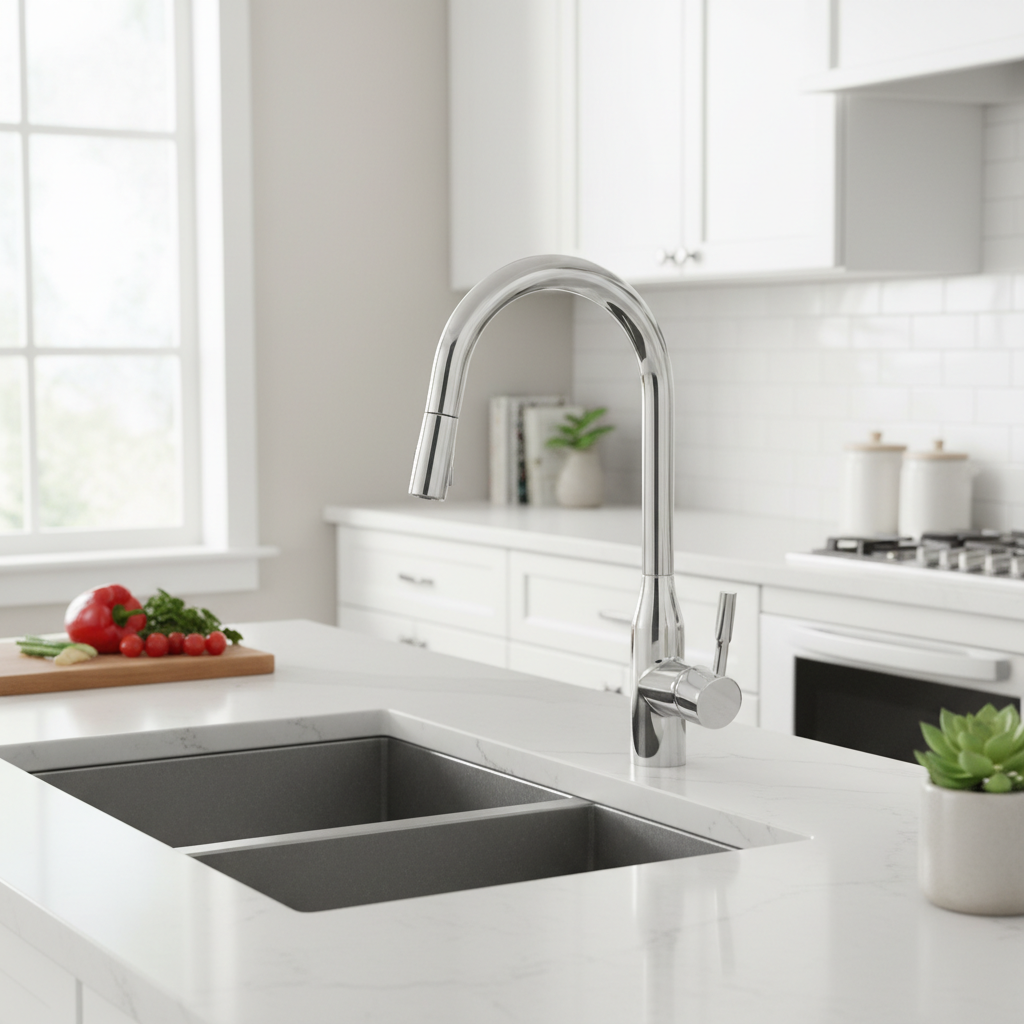
Choosing the right kitchen faucet involves more than just aesthetics; it’s about functionality, convenience, and critically, water pressure. For many homeowners, the dilemma often boils down to a traditional side sprayer or a more modern integrated faucet with a pull-down or pull-out spray head. Each design offers distinct advantages and drawbacks, particularly concerning the force and efficiency of the water spray. Understanding these differences, especially in pressure performance, is key to selecting a fixture that truly meets your kitchen’s demands.
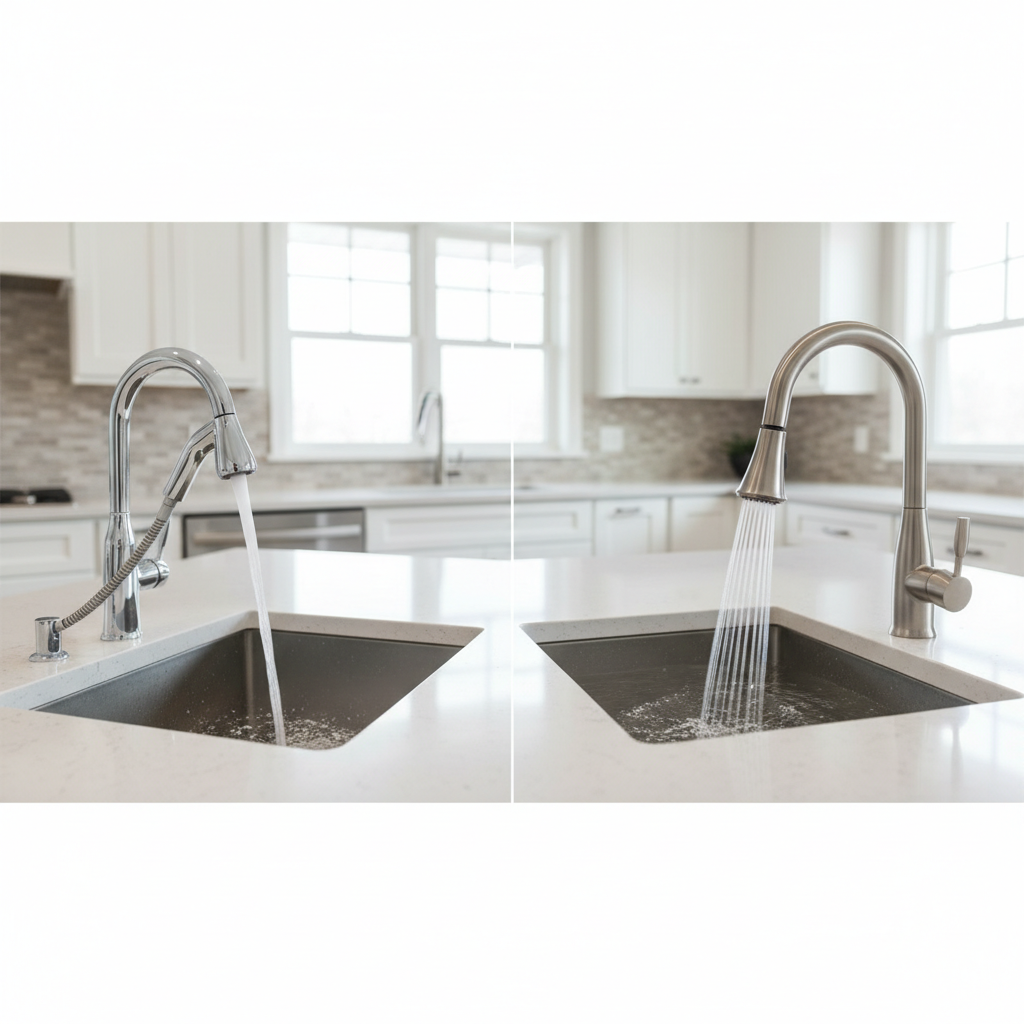
Understanding Sprayer Types: Side vs. Integrated Faucets
Before diving into pressure comparisons, it’s essential to define what distinguishes these two popular kitchen faucet configurations.
What is a Side Sprayer?
|
Our Picks for the Best High pressure faucet in 2026
As an Amazon Associate I earn from qualifying purchases.
|
||
| Num | Product | Action |
|---|---|---|
| 1 | Chrome Brass Wall Mount Faucet, Single Cold Water Utility Tap, G 1/2 Inch Connection for Laundry Sink, Mop Basin, Garage, Outdoor Garden Hose |

|
| 2 | Inchant Outdoor Kitchen Sink Faucet - 360° Rotatable Single Hole Single Handle Cold Water Kitchen Faucet Flexible Neck Laundry Room Tap Bar Garden Outdoor Faucet, Deck Mount Chrome Finish |
|
| 3 | FORIOUS Kitchen Faucets with Pull Down Sprayer, Brushed Nickel, High Arc Single Handle Classic Stainless Steel Sink Faucet 1 or 3 Hole, Suitable for Farmhouse Camper Laundry Rv Bar |
|
| 4 | 2PCS 360 Degree Swivel Faucet Aerator Deluxe Water Saving Faucet Sprayer Water Saving Bubbler Pressurized Faucet Filter Kitchen Accessories (360 Degree, Count, 2) |
|
| 5 | GIMILI Kitchen Faucet with Pull Down Sprayer Single Handle High Pressure Kitchen Sink Faucet Commercial Double-Headed Stainless Steel Kitchen Faucets Brushed Nickel and Black |
|
| 6 | 3-Adjustable Water Pressure Faucet with Booster Shower Heads - ABS Material, Extended Spout, Anti-Splash, Universal Connector |
|
| 7 | TIORIY Kitchen Faucet Head with 15 Adapters, High Pressure 3 Functions Pull Down Kitchen Spray Head Replacement, Pull Out Kitchen Sink Sprayer Nozzle, Brushed Gold, ABS |
|
| 8 | TMOK 1/2" x 3/4" Brass Outdoor Faucet & High Pressure Jet Nozzle with Leakproof Shut Off Valve, Heavy-Duty Brass 3/4" GHT Hose Nozzle with 4 Garden Hose Rubber Washers, Teflon Tape |
|
| 9 | AIMADI Kitchen Faucet with Pull Down Sprayer,Commercial Stainless Steel Pull Down Sprayer Kitchen Faucet Single Hole Single Handle RV Laundry Outdoor Kitchen Sink Faucets |
|
| 10 | Kitchen Faucet with Pull Down Sprayer, High Arc Single Handle Brushed Nickel Stainless Steel 1 or 3 Hole Faucet for Kitchen Sink, Farmhouse, RV, Laundry, Bar, Outdoor |
|
A side sprayer is a standalone component, a secondary faucet head that sits independently alongside your main kitchen faucet. It typically requires a separate hole drilled into your sink or countertop for installation. Activated by a button or lever on its handle, the side sprayer draws water from the same supply line as the main faucet but operates distinctly. This independent design allows for the main faucet to run simultaneously with the sprayer, offering a level of control that some users find beneficial for multitasking in the kitchen.
What is an Integrated Faucet Sprayer?
An integrated faucet sprayer, often referred to as a pull-down or pull-out faucet, incorporates the spray head directly into the main faucet spout. In a pull-down model, the spout extends downward into the sink, while a pull-out version extends straight out horizontally. Both types feature a flexible hose that allows the sprayer to be maneuvered around the sink area. The spray function is usually toggled by a button on the spray head itself, allowing for a quick switch between a steady stream and a powerful spray. This all-in-one design eliminates the need for an additional hole in the countertop, contributing to a cleaner, more streamlined look.
Pressure Performance: A Direct Comparison
When it comes to the crucial aspect of water pressure, integrated faucets generally hold an advantage over side sprayers.
Side Sprayer Pressure
Side sprayers are often noted for delivering “less pressure than built-in spray” systems. This difference can be attributed to several factors. The water path for a side sprayer often involves a narrower hose and sometimes less optimized internal valving compared to integrated units. While they provide adequate pressure for basic rinsing, users seeking a powerful spray to blast off stubborn food residues might find side sprayers somewhat lacking. The overall water pressure in your home, the diameter of the sprayer’s hose, and the design of its nozzle all contribute to its eventual output.
Integrated Sprayer Pressure
Integrated faucet sprayers, whether pull-down or pull-out, typically offer a stronger, more consistent spray. Their design allows for a more direct and efficient flow from the main water supply to the spray head. Many integrated faucets are engineered with specialized aerators and internal mechanisms that enhance water pressure and create a robust spray pattern. This superior pressure makes them highly effective for heavy-duty cleaning tasks, such as rinsing large pots, washing vegetables thoroughly, or quickly clearing the sink.
It’s worth noting that while integrated faucets generally offer better pressure, their performance can still be affected by the overall water pressure of your home. Some pull-down models, for instance, are “not recommended for kitchens with low water pressure” as their internal mechanisms might struggle to deliver an optimal spray if the incoming water flow is already weak. However, in a home with average or good water pressure, an integrated sprayer is typically the more powerful option.
Beyond Pressure: Functional Differences and User Experience
While pressure is a primary concern, other functional aspects and user experiences also differentiate side sprayers and integrated faucets.
Side Sprayer Pros & Cons (Beyond Pressure)
Pros:
- More Control: Side sprayers offer independent control over water flow, meaning you can use the main faucet and sprayer simultaneously without affecting each other.
- Cost-Effective: They are often more affordable than pull-down faucets, making them a budget-friendly choice.
- Dedicated Functionality: The separate unit provides a dedicated spraying function, allowing for a streamlined workflow.
- Flexible Placement: Being a separate unit, a side sprayer can be positioned flexibly on the countertop.
Cons:
- Requires Extra Installation Space: A significant drawback is the need for an additional hole in your sink or countertop.
- Limited Reach: Their hose reach can be more restricted compared to integrated pull-down models.
- Cluttered Look: Having two separate fixtures can create a less streamlined appearance, which may not suit minimalist kitchen designs.
- Awkward Use: The non-integrated design may feel more cumbersome, requiring users to hold a trigger for continuous spray with no lock mode.
- Potential for Leaks: As a separate unit with its own hose, a side sprayer can potentially cause more damage under the sink if a leak develops.
Integrated Sprayer Pros & Cons (Beyond Pressure)
Pros:
- Convenient All-in-One Design: Combines the spout and sprayer into a single unit, offering seamless functionality.
- Space-Saving: Requires only one hole for installation, ideal for smaller sinks or limited counter space.
- Versatility and Flexibility: The long, flexible hose allows for extensive reach and precise water direction, making tasks like cleaning large pots or rinsing every corner of the sink much easier.
- Modern Appeal: Integrated faucets typically boast sleek, contemporary designs that enhance kitchen aesthetics.
- Easy to Use: Generally designed for single-handed operation, allowing quick switching between stream and spray.
- Multiple Spray Options: Many models offer varied spray patterns, from aerated streams to powerful sprays, catering to different tasks.
Cons:
- Higher Price Point: Integrated faucets, especially feature-rich models, tend to be more expensive.
- Potential Durability Issues: The hose and retraction mechanism can experience wear and tear over time, potentially leading to costly repairs.
- Bulkier Design: While sleek, some integrated models can be bulkier, which might be a consideration for very small sinks.
- Dangling Heads: Cheaper pull-down models may suffer from faulty weights or mechanisms, leading to a spray head that doesn’t dock properly.
Comparison Table: Side Sprayer vs. Integrated Faucet
| Feature | Side Sprayer Faucet | Integrated Faucet (Pull-Down/Pull-Out) |
|---|---|---|
| Pressure Output | Generally lower pressure | Generally higher, more consistent pressure |
| Installation | Requires an additional hole | Single-hole installation |
| Space | Occupies more counter space (two fixtures) | Space-saving, all-in-one design |
| Cost | Typically more budget-friendly | Often a higher price point |
| Flexibility | Independent control, flexible placement | Versatile reach, easy switching between spray modes |
| Aesthetics | Can appear cluttered, traditional look | Sleek, modern, streamlined appearance |
| Ease of Use | Manual trigger, may require holding button | Often one-handed operation, toggle switch |
| Common Issues | Limited reach, potential leaks, no lock-spray | Hose wear, docking issues in cheaper models |
Choosing the Right Sprayer for Your Kitchen
The optimal choice between a side sprayer and an integrated faucet ultimately hinges on your specific needs, kitchen layout, and personal preferences.
If high pressure is a non-negotiable priority for vigorous cleaning and quick rinsing, an integrated pull-down or pull-out faucet is generally the superior option. Consider also its space-saving design and modern aesthetic if those are important to you.
On the other hand, if you prioritize budget-friendliness, appreciate the independent control of separate water flows, or have a kitchen design that lends itself to a more traditional, two-fixture setup, a side sprayer could be a suitable choice.
Consider the following factors:
- Existing Water Pressure: If your home already has low water pressure, even an integrated faucet might not deliver a powerful spray, but it will likely still outperform a side sprayer.
- Sink Size and Configuration: Integrated faucets are excellent for deep sinks and large items, while side sprayers may be sufficient for smaller, shallower sinks.
- Budget: Determine how much you are willing to invest in a faucet.
- Aesthetic Preference: Do you prefer a sleek, minimalist look or a more traditional setup?
- Daily Tasks: What are your most frequent kitchen activities? Rinsing delicate produce or scrubbing baked-on dishes?
Installation and Maintenance Tips for Optimal Sprayer Performance
Regardless of your choice, proper installation and regular maintenance are crucial for maximizing your sprayer’s performance and lifespan.
- Professional Installation: While DIY is possible, professional installation ensures proper sealing and connection, minimizing leak risks.
- Check Water Lines: Ensure that the water supply lines are clear and free from kinks or obstructions, which can impede water flow and pressure.
- Clean Nozzles Regularly: Mineral deposits and hard water can clog spray nozzles, reducing pressure and altering spray patterns. Regularly wipe down or gently scrub the rubber nozzles to keep them clear.
- Inspect Hoses: For both types, periodically check the sprayer hose for any signs of wear, kinks, or leaks. Address issues promptly to prevent further damage.
- Aerator Maintenance: If your faucet’s spray seems weak, cleaning or replacing the aerator (the mesh screen at the tip of the spout) can often restore optimal pressure.
Frequently Asked Questions
Can I improve my side sprayer’s water pressure?
While a side sprayer generally has lower pressure than an integrated one, you can improve its performance by ensuring the water lines are clear, removing any mineral buildup from the nozzle, and verifying that your home’s main water pressure is adequate. Some users might consider an in-line booster pump, but this is a more complex solution.
Do integrated faucets lose pressure over time?
Integrated faucets can experience a decrease in pressure over time, often due to mineral buildup in the aerator, blockages in the hose, or wear in the internal valving. Regular cleaning and maintenance, particularly of the spray head and aerator, can help maintain optimal pressure.
Are side sprayers considered outdated?
While integrated faucets have gained popularity for their modern design and convenience, side sprayers are not entirely outdated. They remain a viable option for those who prefer their independent control, traditional aesthetic, or cost-effectiveness. The choice often comes down to personal preference and kitchen design.
Conclusion
The choice between a side sprayer and an integrated faucet is a pivotal decision for any kitchen. While integrated faucets typically offer superior water pressure, an all-in-one design, and a modern aesthetic, side sprayers provide independent control and a more budget-friendly approach. Your decision should align with your specific kitchen tasks, aesthetic desires, and practical considerations, particularly the importance you place on spray power. By carefully weighing the pros and cons of each, you can select a faucet that not only complements your kitchen’s style but also enhances its daily functionality.
Which sprayer type do you believe would best elevate your kitchen experience?