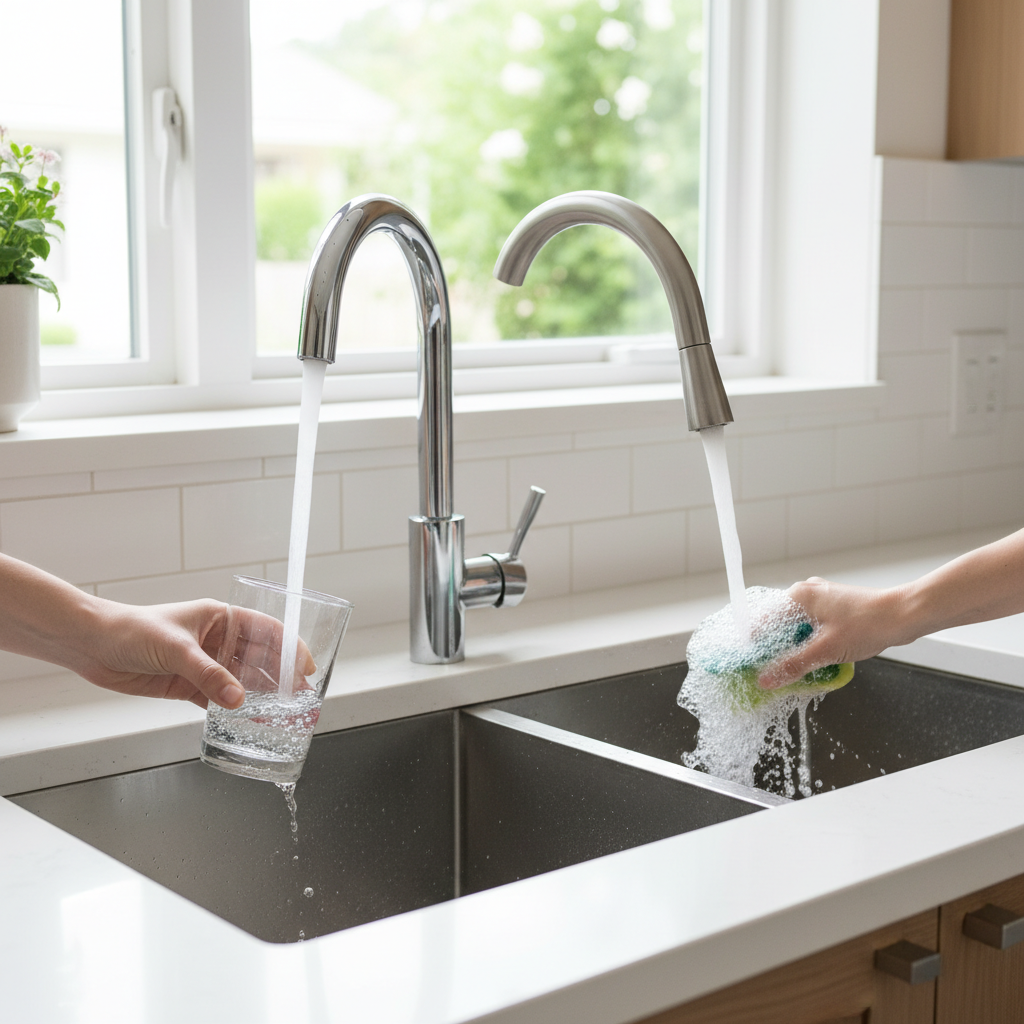
Having a shallow sink can be a real design statement in your kitchen or bathroom, but it often comes with an unwelcome guest: splashing water. If you’ve ever found yourself wiping down countertops and floors after a simple hand wash or dish rinse, you know the frustration. The good news is that you don’t have to sacrifice style for practicality. Choosing the right faucet can transform your shallow sink experience, making daily tasks cleaner and more enjoyable. This article will guide you through understanding why splashing occurs and help you select the perfect faucet to keep water where it belongs – in the sink.
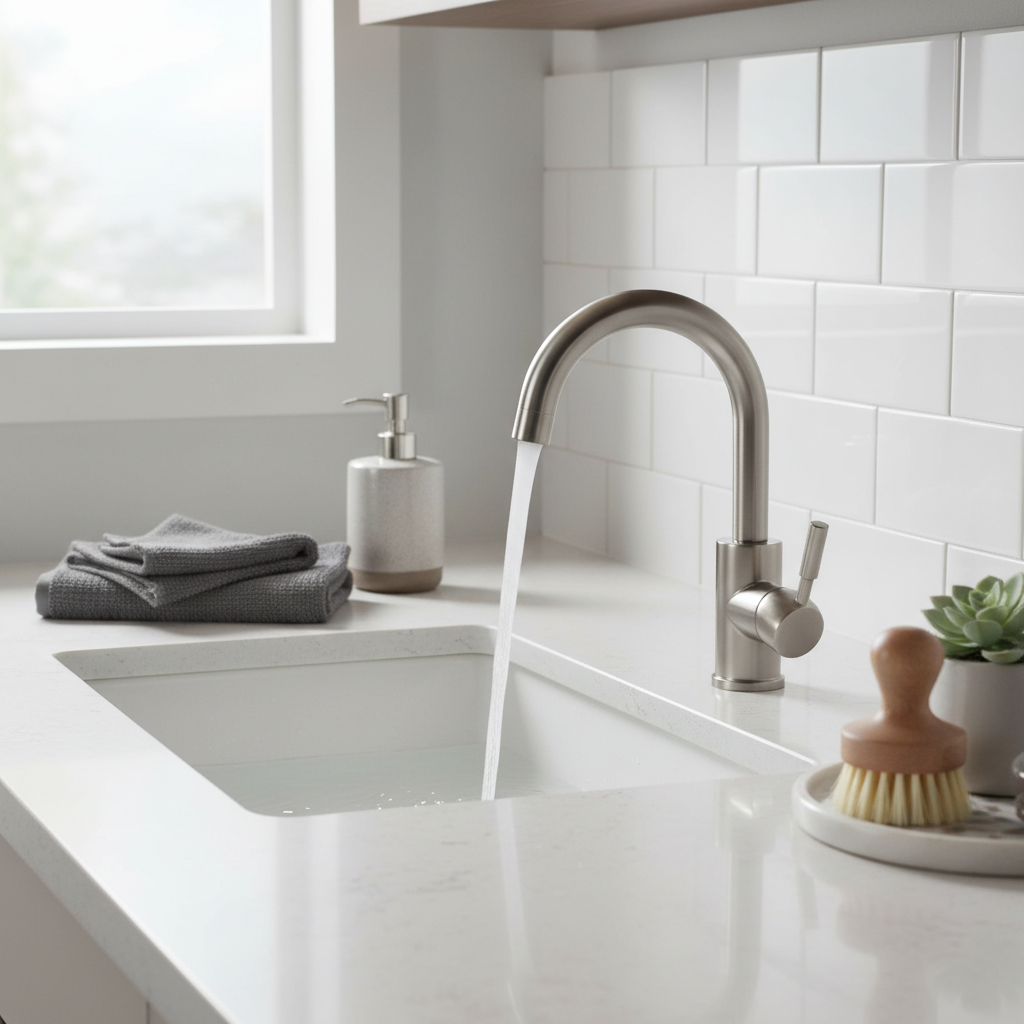
Understanding the Splash: Why Shallow Sinks and Faucets Don’t Always Mix
Splashing from a sink can be a constant nuisance, and shallow sinks are particularly susceptible to this issue. The primary reason for excessive splashing often lies in the interaction between the faucet and the sink’s design.
When water falls from a significant height into a shallow basin, it generates more force upon impact. This force causes the water to rebound outwards, easily clearing the low edges of the sink. Many decorative shallow sinks, especially vessel sinks, inherently lack the depth to contain this splash effectively. Furthermore, the height and reach of your faucet’s spout play a critical role. A faucet that is too tall or has a spout that extends too far back or forward can direct the water stream against the sink’s sides rather than its center, increasing the likelihood of splashing. High water pressure can also exacerbate this problem, turning a gentle flow into a powerful stream that bounces aggressively within the limited confines of a shallow basin. An aerator that is clogged or missing can contribute to a less controlled, more forceful stream, leading to more splashing.
Key Faucet Features to Prevent Splashing in Shallow Sinks
Selecting a faucet designed with splash prevention in mind is crucial for shallow sinks. Several key features can significantly reduce or eliminate unwanted water messes.
The most critical factor is the spout height and reach. For shallow sinks, opt for faucets with low-arc spouts or shorter spouts. These designs reduce the distance the water has to fall, minimizing the force of impact and the subsequent splash. The spout’s reach should also be carefully considered, ensuring the water stream lands directly in the center of the sink basin. This optimal positioning prevents water from hitting the sink’s sides and rebounding over the edges.
Aerated flow is another vital feature. Faucets equipped with aerators mix air with the water stream, creating a softer, Champagne-like flow that is less prone to splashing. This gentle stream also helps conserve water without compromising functionality. Some modern faucets offer an adjustable flow rate, allowing you to control the intensity of the water. A lower flow rate can be particularly beneficial for shallow sinks, providing a customized experience that keeps splashing at bay.
When considering faucet types, several are well-suited for shallow sinks:
- Low-Arc Faucets: These are explicitly designed with a shorter curve, keeping the spout closer to the sink basin. They are an excellent choice for minimizing splash and are often ideal for sinks located under windows or shelving where height clearance is limited.
- Pull-Out Faucets: Similar to pull-down models, pull-out faucets allow the spray head to be pulled directly towards you. This design offers excellent maneuverability and control, letting you direct the water precisely where needed within the sink, which is beneficial for smaller or shallow basins.
- Wall-Mounted Faucets: Installed directly on the wall above the sink, these faucets free up valuable counter space and allow for precise positioning of the spout. They are particularly effective for vessel sinks, as they can be mounted at an ideal height and reach to prevent splashing.
- Single-Handle Faucets: Often featuring compact designs, single-handle faucets are convenient for smaller spaces and can contribute to a minimalist look, reducing visual clutter. Their streamlined operation also makes them easy to use.
Choosing the Right Faucet for Your Shallow Sink: A Buyer’s Guide
Selecting the perfect faucet for your shallow sink involves more than just aesthetics; it requires careful consideration of practicality and functionality.
First, assess your existing sink. Note its depth, overall dimensions, and the number of pre-drilled holes. These details will determine compatible faucet types and mounting styles. For instance, a very shallow basin will benefit most from a faucet with a minimal drop height. Next, consider the faucet’s dimensions, focusing on spout height and reach. The spout should be low enough to prevent excessive splashing but high enough to allow comfortable hand washing or dish cleaning. Ideally, the water stream should hit the drain or the deepest part of the sink directly. A good rule of thumb is to measure from the center mounting hole forward to the center of the sink to ensure proper spout reach.
Material and finish are also important for both durability and aesthetics. Common materials include brass, stainless steel, and zinc alloy, often finished with chrome, brushed nickel, or matte black. Choose a finish that complements your bathroom or kitchen decor and is easy to clean. Finally, consider your budget and brand reputation. While it’s tempting to opt for the cheapest option, investing in a reputable brand often translates to better quality, more reliable splash-prevention features, and longer-lasting performance. Read reviews and look for brands known for their innovation in faucet technology and customer satisfaction.
Top Faucet Recommendations for Shallow Sinks (No Splash)
Finding a faucet that perfectly balances style and splash-free functionality for your shallow sink can be a game-changer. Here are some top recommendations that excel in preventing unwanted water messes.
1. Moen Camerist Low Arc Kitchen Faucet
|
Our Picks for the Best High pressure faucet in 2026
As an Amazon Associate I earn from qualifying purchases.
|
||
| Num | Product | Action |
|---|---|---|
| 1 | Chrome Brass Wall Mount Faucet, Single Cold Water Utility Tap, G 1/2 Inch Connection for Laundry Sink, Mop Basin, Garage, Outdoor Garden Hose |

|
| 2 | FORIOUS Kitchen Faucets with Pull Down Sprayer, Brushed Nickel, High Arc Single Handle Classic Stainless Steel Sink Faucet 1 or 3 Hole, Suitable for Farmhouse Camper Laundry Rv Bar |
|
| 3 | TMOK 1/2" x 3/4" Brass Outdoor Faucet & High Pressure Jet Nozzle with Leakproof Shut Off Valve, Heavy-Duty Brass 3/4" GHT Hose Nozzle with 4 Garden Hose Rubber Washers, Teflon Tape |
|
| 4 | 2PCS 360 Degree Swivel Faucet Aerator Deluxe Water Saving Faucet Sprayer Water Saving Bubbler Pressurized Faucet Filter Kitchen Accessories (360 Degree, Count, 2) |
|
| 5 | Kitchen Faucet with Pull Down Sprayer, High Arc Single Handle Brushed Nickel Stainless Steel 1 or 3 Hole Faucet for Kitchen Sink, Farmhouse, RV, Laundry, Bar, Outdoor |
|
| 6 | Inchant Outdoor Kitchen Sink Faucet - 360° Rotatable Single Hole Single Handle Cold Water Kitchen Faucet Flexible Neck Laundry Room Tap Bar Garden Outdoor Faucet, Deck Mount Chrome Finish |
|
| 7 | AIMADI Kitchen Faucet with Pull Down Sprayer,Commercial Stainless Steel Pull Down Sprayer Kitchen Faucet Single Hole Single Handle RV Laundry Outdoor Kitchen Sink Faucets |
|
| 8 | TIORIY Kitchen Faucet Head with 15 Adapters, High Pressure 3 Functions Pull Down Kitchen Spray Head Replacement, Pull Out Kitchen Sink Sprayer Nozzle, Brushed Gold, ABS |
|
| 9 | 3-Adjustable Water Pressure Faucet with Booster Shower Heads - ABS Material, Extended Spout, Anti-Splash, Universal Connector |
|
| 10 | GIMILI Kitchen Faucet with Pull Down Sprayer Single Handle High Pressure Kitchen Sink Faucet Commercial Double-Headed Stainless Steel Kitchen Faucets Brushed Nickel and Black |
|
The Moen Camerist is a standout for its low-arc design, specifically engineered to keep water contained within the sink. Its thoughtful profile ensures the water stream has a shorter distance to fall, significantly reducing splash. Many users appreciate its “Spot Resist Stainless” finish, which not only looks sleek but also resists fingerprints and water spots, making it an excellent choice for busy kitchens. This faucet is a strong contender for those prioritizing a clean, dry countertop.
2. Delta Collins Pull-Out Kitchen Faucet
Delta’s Collins Pull-Out Kitchen Faucet offers exceptional control, which is key to preventing splashing in shallow sinks. The pull-out spray head allows you to direct the water flow precisely, minimizing errant splashes. Its compact design is well-suited for smaller or shallow basins, providing versatility without overwhelming the sink area. The combination of its pull-out functionality and suitable dimensions makes it a practical choice for everyday use.
3. Grohe Eurosmart Dual Spray Pull-Out Kitchen Faucet
With a sleek, low-profile design and a faucet height of just 7.13 inches, the Grohe Eurosmart Dual Spray Pull-Out is ideal for contemporary kitchens with shallow sinks or limited clearance. Its pull-out sprayer offers two settings, allowing for a gentler stream when needed, further reducing splash. While its water pressure might not be the strongest according to some reviews, its ability to easily reach all corners of a sink and its smooth hose retraction make it a user-friendly option for maintaining a dry environment.
Installation and Maintenance Tips for a Splash-Free Experience
Even with the perfect faucet, proper installation and regular maintenance are crucial for ensuring a continuously splash-free experience with your shallow sink.
Proper installation is foundational. When installing your new faucet, ensure the spout is optimally positioned so the water stream lands as close to the center of the drain as possible. Avoid situations where the water hits the sink’s side walls, as this is a common cause of splashing. If you’re unsure, consulting a professional plumber can ensure correct alignment and secure mounting.
You can also adjust water pressure to mitigate splashing. Many homes have shut-off valves located underneath the sink, allowing you to control the water volume directed to the faucet. Gently turning these valves down can reduce the force of the water flow, creating a softer stream that is less likely to splash. For a more comprehensive adjustment, some homes have a main pressure control valve on the water meter.
Regular aerator maintenance is simple but highly effective. The aerator, located at the tip of your faucet spout, mixes air into the water, creating a smooth, non-splashing stream. Over time, mineral deposits or debris can clog the aerator, leading to an erratic or forceful spray. Unscrew the aerator periodically, clean its screens and components, and reinstall it. If heavily damaged or corroded, consider replacing it. This small component can make a significant difference in preventing splash. Adhering to these simple steps will help maintain optimal faucet performance and a consistently dry countertop around your shallow sink.
Frequently Asked Questions About Faucets and Shallow Sinks
Can any faucet work with a shallow sink if I adjust the water pressure?
While adjusting water pressure can help, it’s not a universal solution. A faucet with an inherently tall spout or an improper reach will still be prone to splashing in a shallow sink, even with reduced pressure. It’s best to choose a faucet designed for shallow sinks.
What’s the ideal spout height for a vessel sink to prevent splashing?
For vessel sinks, which are often quite shallow, the ideal spout height is one that places the water stream as close to the sink basin as possible without hindering usability. Low-arc or wall-mounted faucets that position the spout just a few inches above the sink’s rim are typically the best choice to minimize splashing.
Are pull-down faucets good for shallow sinks?
Pull-down faucets with a high-arc design might still cause splashing due to the height of the water’s drop. However, pull-out faucets, which bring the sprayer head closer to you, or low-arc pull-down models can be effective for shallow sinks as they offer better control over the water stream’s impact point.
How often should I clean my faucet aerator?
It’s recommended to clean your faucet aerator every six months, or more frequently if you notice reduced water flow, an uneven stream, or increased splashing. Mineral buildup can quickly affect its performance, so regular cleaning ensures an optimal, splash-free flow.
What’s the difference between a low-arc and a high-arc faucet?
A low-arc faucet has a shorter, less curved spout, keeping the water outlet closer to the sink basin. A high-arc faucet features a tall, gracefully curved spout, offering more clearance under the faucet. For shallow sinks, low-arc designs are generally preferred to prevent splashing.
Conclusion
Navigating the world of faucets for shallow sinks doesn’t have to be a splashy affair. By understanding the dynamics of water flow in a confined space and prioritizing specific faucet features, you can effectively prevent unwanted messes. Choosing faucets with low-arc spouts, proper reach, and aerated flow, or opting for practical designs like pull-out or wall-mounted models, will ensure your shallow sink remains both stylish and functional. Remember that careful selection, coupled with mindful installation and routine maintenance, is key to enjoying a truly splash-free experience. What steps will you take today to create a more serene and dry environment around your shallow sink?