Are you constantly battling a weak shower stream or worried about your appliances struggling with too much force? Your home’s water pressure plays a crucial role in daily comfort and the longevity of your plumbing system and appliances. Understanding and maintaining optimal water pressure, measured in pounds per square inch (PSI), is essential for every homeowner. This comprehensive guide will walk you through everything you need to know about safely testing your home’s water pressure, interpreting the results, and ensuring your system runs smoothly.
What is Water Pressure (PSI) and Why it Matters
Water pressure is the force at which water flows through your pipes and out of your fixtures. It’s typically measured in Pounds per Square Inch (PSI). A balanced water pressure is key to a functional home. Too little pressure can lead to frustratingly slow showers, inefficient dishwashers, and washing machines that take forever to fill. Imagine trying to rinse dishes with a mere trickle or waiting an eternity for your washing machine to complete a cycle.
Conversely, excessively high water pressure can be just as problematic, if not more damaging. It can put undue strain on your pipes, leading to leaks, bursts, and premature wear and tear on water heaters, faucets, and other water-using appliances. High pressure can even cause noisy pipes and lead to higher water bills due to increased flow. Knowing your home’s PSI helps you protect your investment and enhance your daily experience.
Understanding Ideal Home Water Pressure Levels
For most residential properties connected to a municipal water supply, an ideal water pressure range falls between 40 and 80 PSI. Many plumbing experts consider a range of 45-55 PSI to be excellent, providing sufficient flow without overstraining your system. Some guidelines suggest 50-70 PSI as the sweet spot. If your home uses a well system, the normal range might be slightly different, typically between 30 and 50 PSI.
Readings below 40 PSI generally indicate low pressure, while anything consistently above 80 PSI signals high pressure. While some municipal systems might occasionally deliver higher pressures, consistently exceeding 70 or 80 PSI can be detrimental over time and often necessitates the installation or adjustment of a pressure-reducing valve (PRV). Regular checks are crucial, as even if you have a PRV, it can fail without obvious signs, making monitoring your PSI vital.
Essential Tools for Accurate Water Pressure Testing
Testing your home’s water pressure is a straightforward task that requires only one primary tool: a water pressure gauge. These affordable devices are readily available at most hardware or home improvement stores.
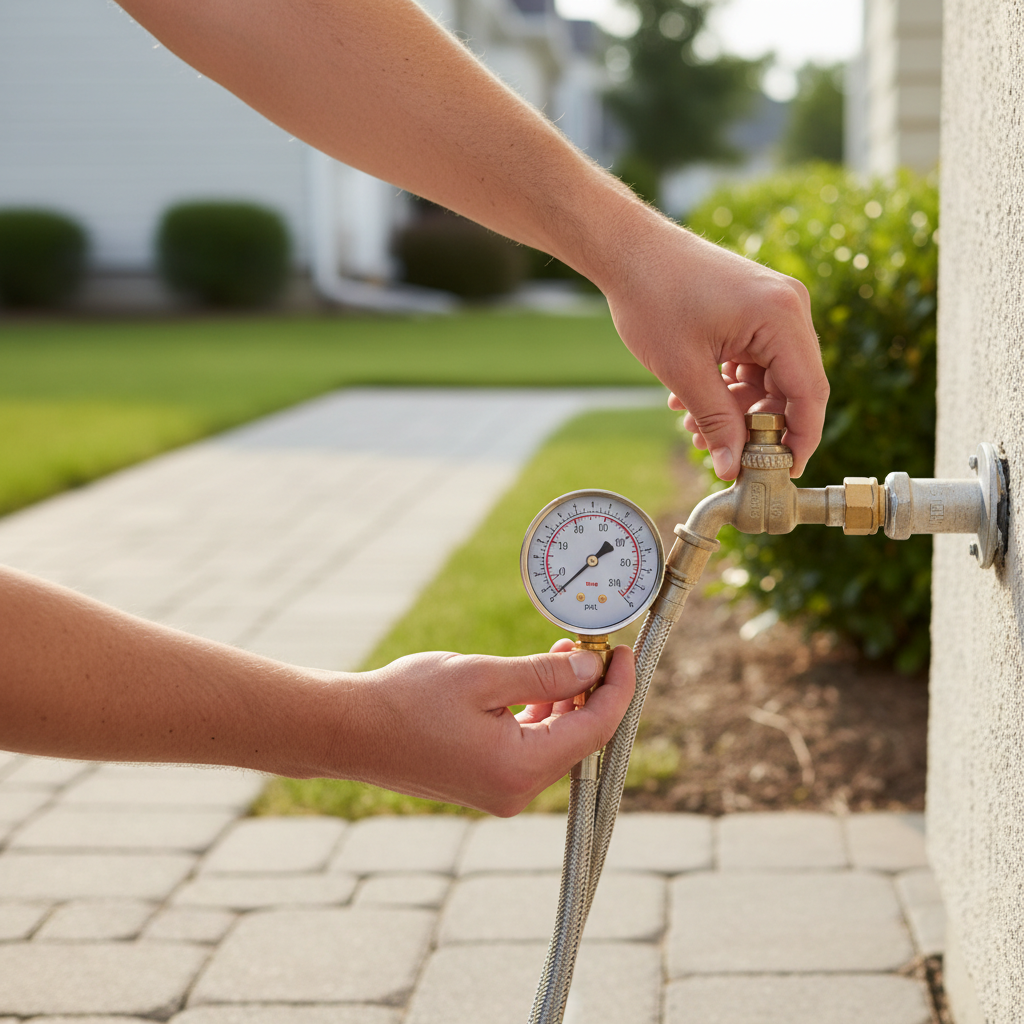
When selecting a water pressure gauge, look for one designed for household use. It should have female hose threads, allowing it to easily screw onto a standard outdoor hose spigot (often called a hose bib). Ensure it comes with a rubber gasket for a tight, leak-free seal, which is critical for accurate readings. Most gauges designed for home use can measure up to 100 PSI or even 300 PSI, which is sufficient for typical residential pressures. Analog gauges with a needle are common and easy to read at a glance, though digital options offer precise numerical readings.
Step-by-Step Guide: How to Safely Test Your Home’s Water Pressure
Testing your home’s water pressure is a simple DIY task that can provide valuable insight into your plumbing system’s health. Here’s how to do it safely and accurately:
Preparation is Key
|
Our Picks for the Best High pressure faucet in 2026
As an Amazon Associate I earn from qualifying purchases.
|
||
| Num | Product | Action |
|---|---|---|
| 1 | TIORIY Kitchen Faucet Head with 15 Adapters, High Pressure 3 Functions Pull Down Kitchen Spray Head Replacement, Pull Out Kitchen Sink Sprayer Nozzle, Brushed Gold, ABS |

|
| 2 | AIMADI Kitchen Faucet with Pull Down Sprayer,Commercial Stainless Steel Pull Down Sprayer Kitchen Faucet Single Hole Single Handle RV Laundry Outdoor Kitchen Sink Faucets |
|
| 3 | Inchant Outdoor Kitchen Sink Faucet - 360° Rotatable Single Hole Single Handle Cold Water Kitchen Faucet Flexible Neck Laundry Room Tap Bar Garden Outdoor Faucet, Deck Mount Chrome Finish |
|
| 4 | TMOK 1/2" x 3/4" Brass Outdoor Faucet & High Pressure Jet Nozzle with Leakproof Shut Off Valve, Heavy-Duty Brass 3/4" GHT Hose Nozzle with 4 Garden Hose Rubber Washers, Teflon Tape |
|
| 5 | Chrome Brass Wall Mount Faucet, Single Cold Water Utility Tap, G 1/2 Inch Connection for Laundry Sink, Mop Basin, Garage, Outdoor Garden Hose |
|
| 6 | GIMILI Kitchen Faucet with Pull Down Sprayer Single Handle High Pressure Kitchen Sink Faucet Commercial Double-Headed Stainless Steel Kitchen Faucets Brushed Nickel and Black |
|
| 7 | FORIOUS Kitchen Faucets with Pull Down Sprayer, Brushed Nickel, High Arc Single Handle Classic Stainless Steel Sink Faucet 1 or 3 Hole, Suitable for Farmhouse Camper Laundry Rv Bar |
|
| 8 | 2PCS 360 Degree Swivel Faucet Aerator Deluxe Water Saving Faucet Sprayer Water Saving Bubbler Pressurized Faucet Filter Kitchen Accessories (360 Degree, Count, 2) |
|
| 9 | Kitchen Faucet with Pull Down Sprayer, High Arc Single Handle Brushed Nickel Stainless Steel 1 or 3 Hole Faucet for Kitchen Sink, Farmhouse, RV, Laundry, Bar, Outdoor |
|
| 10 | 3-Adjustable Water Pressure Faucet with Booster Shower Heads - ABS Material, Extended Spout, Anti-Splash, Universal Connector |
|
Before you begin, ensure no water is actively running in your home, both inside and out. This includes turning off all faucets, showerheads, dishwashers, washing machines, ice makers, and sprinklers. Any active water flow can cause a false low reading on your gauge, giving you an inaccurate picture of your static water pressure.
Connecting the Gauge
Locate an outdoor hose spigot. Ideally, choose one closest to where the main water line enters your house. This is often near your water meter (for city water) or pressure tank (for well systems), as it provides the most accurate reading of the incoming pressure before it’s distributed throughout your home. Remove any attached hoses and firmly screw the water pressure gauge onto the spigot by hand. Ensure it’s snug to prevent leaks. If you notice any dripping, turn off the spigot, tighten the gauge slightly with pliers, and recheck. A good seal is paramount for accuracy.
Taking the Reading
Once the gauge is securely attached and all water in the house is off, fully open the spigot valve. Allow the water to flow into the gauge for a few minutes. Watch as the needle on the gauge settles on a number. This number represents your home’s static water pressure in PSI.
Repeating for Accuracy
To ensure the most accurate reading, it’s advisable to repeat this test a few times, perhaps on different days or at varying times. Water pressure can fluctuate slightly depending on municipal usage patterns or well pump cycles. Consistent readings across multiple tests give you the most reliable data. If you have concerns about specific areas, you can also test indoor faucets using appropriate adapters, though the outdoor spigot provides the most general system reading.
Interpreting Your Water Pressure Readings
Once you have your PSI reading, it’s time to understand what the numbers are telling you.
- 40-80 PSI (Ideal Range): If your reading falls within this range, particularly between 45-70 PSI, your water pressure is considered healthy. This indicates your system is operating efficiently, providing good flow without risking damage to your plumbing.
- Below 40 PSI (Low Pressure): Readings consistently below 40 PSI suggest low water pressure. This can lead to weak showers, slow-filling appliances, and overall unsatisfactory water performance. Causes can range from issues with your municipal supply to pipe blockages or even a faulty pressure regulator. For well systems, below 30 PSI is considered non-functional.
- Above 80 PSI (High Pressure): Readings above 80 PSI indicate high water pressure. While some people might initially appreciate strong flow, this level of pressure can cause significant damage to pipes, fixtures, and appliances over time, potentially leading to costly leaks and repairs. Many experts recommend that pressure not exceed 70 or 75 PSI for typical residential plumbing.
“Maintaining your home’s water pressure within the optimal range is a proactive step that can prevent premature wear and tear on your plumbing and appliances, saving you money and headaches in the long run.” – Admin, ReviewReco.com
Common Causes of Water Pressure Issues
Understanding why your water pressure might be too high or too low is the first step toward finding a solution.
Causes of Low Water Pressure:
- Municipal Supply Issues: Problems with your local water utility or high demand during peak hours can affect pressure.
- Faulty Pressure-Reducing Valve (PRV): If you have a PRV, it might be stuck or failing, restricting water flow.
- Pipe Blockages: Mineral buildup (scale) or corrosion can narrow pipes, reducing pressure.
- Leaks: Even small leaks can significantly drop overall system pressure.
- Shared Water Lines: Old, undersized lines serving multiple homes can lead to pressure drops.
- Water Heater Issues: Sediment buildup in a water heater can restrict flow to hot water fixtures.
Causes of High Water Pressure:
- Municipal Supply: Some areas naturally have higher incoming water pressure.
- Faulty Pressure-Reducing Valve (PRV): A PRV that is stuck open or improperly set will fail to regulate pressure.
- Thermal Expansion: When water is heated in a closed system (like a water heater), it expands. Without an expansion tank, this can temporarily increase pressure.
When to Consider Professional Help
While testing your water pressure is a straightforward DIY task, addressing significant pressure issues often requires the expertise of a professional plumber.
You should call a plumber if:
- Your water pressure is consistently below 40 PSI or above 80 PSI despite your best efforts.
- You suspect a faulty PRV but are unsure how to adjust or replace it.
- You notice sudden, dramatic drops or spikes in pressure.
- You experience frequent leaks, burst pipes, or appliance damage that could be linked to pressure.
- You suspect a serious blockage or pipe corrosion.
- You have concerns about your well system’s pressure tank or pump.
A professional plumber can accurately diagnose the root cause of the problem, recommend the appropriate solutions, and ensure any adjustments or repairs are done safely and according to local codes.
Maintaining Healthy Water Pressure in Your Home
Once you’ve identified and corrected any water pressure issues, a few simple practices can help maintain optimal PSI for years to come:
- Regular Testing: Test your water pressure at least twice a year, or whenever you notice a change in flow. This proactive approach helps catch problems early.
- Inspect Your PRV: If you have a pressure-reducing valve, know where it is and periodically check for leaks or signs of malfunction. Consider having a plumber inspect it during routine maintenance.
- Consider an Expansion Tank: For homes with a PRV and a closed water heating system, an expansion tank can absorb pressure fluctuations caused by thermal expansion, protecting your system.
- Address Leaks Promptly: Even minor drips can indicate underlying pressure issues or contribute to water loss and pressure drops over time.
- Monitor Water Heater Health: Sediment buildup in your water heater can affect pressure. Regular flushing of your water heater can prevent this.
By staying vigilant and addressing issues as they arise, you can ensure your home’s plumbing system continues to provide reliable, efficient water flow at the right pressure.
Conclusion
Understanding how to safely test your home water pressure PSI is a fundamental skill for any homeowner. It empowers you to protect your plumbing infrastructure, safeguard your appliances, and ensure a comfortable and efficient water supply throughout your home. By utilizing a simple pressure gauge and following a few straightforward steps, you can easily monitor your home’s water pressure.
Remember, the ideal range for most homes is between 40 and 80 PSI, with readings outside this spectrum often indicating a need for attention. While addressing minor fluctuations can be a DIY task, don’t hesitate to consult a plumbing professional for persistent or severe issues. Regular checks and proactive maintenance are your best defense against unexpected plumbing problems. What steps will you take today to ensure your home’s water pressure is perfectly balanced?
FAQ
What PSI is considered too high for a home?
Water pressure consistently above 80 PSI is generally considered too high and can lead to damage to pipes, fixtures, and appliances over time. Many experts recommend staying below 70-75 PSI to ensure the longevity of your plumbing system.
How often should I test my home’s water pressure?
It’s recommended to test your home’s water pressure at least twice a year. Regular testing helps you identify any potential issues early before they escalate into more significant and costly problems.
Can high water pressure damage my washing machine?
Yes, excessively high water pressure can absolutely damage appliances like washing machines and dishwashers. It puts undue strain on internal components, hoses, and seals, leading to premature wear, leaks, or even catastrophic failure.
Do I need to turn off all water in my house before testing?
Yes, it is crucial to turn off all water sources in your home, both inside and out, before testing. Any active water flow can cause inaccurate readings, preventing you from getting a true measurement of your home’s static water pressure.
What should I do if my water pressure is too low?
If your water pressure is too low (below 40 PSI for municipal, or 30 PSI for well systems), first re-test to confirm. Then, check for any visible leaks, inspect your pressure-reducing valve, or contact your municipal water provider. If problems persist, consulting a plumber is advisable.
Can I adjust my water pressure myself?
If your home has a pressure-reducing valve (PRV), it might be adjustable. However, making adjustments without proper knowledge can lead to further issues. It’s often best to consult a plumber to ensure safe and correct adjustment or replacement of the PRV.